Red Leaf Rose
Rosa glauca
Eva on why Red Leaf Rose is one of the best-looking shrubs in the garden come October.
Soil type
Average, clay, or sandy soil — well drained
Hardiness
Zone 2 – 8
Bloom
Late spring into early summer; red hips in fall
Firewise
With care — deciduous, but keep it watered and cleared of dead canes
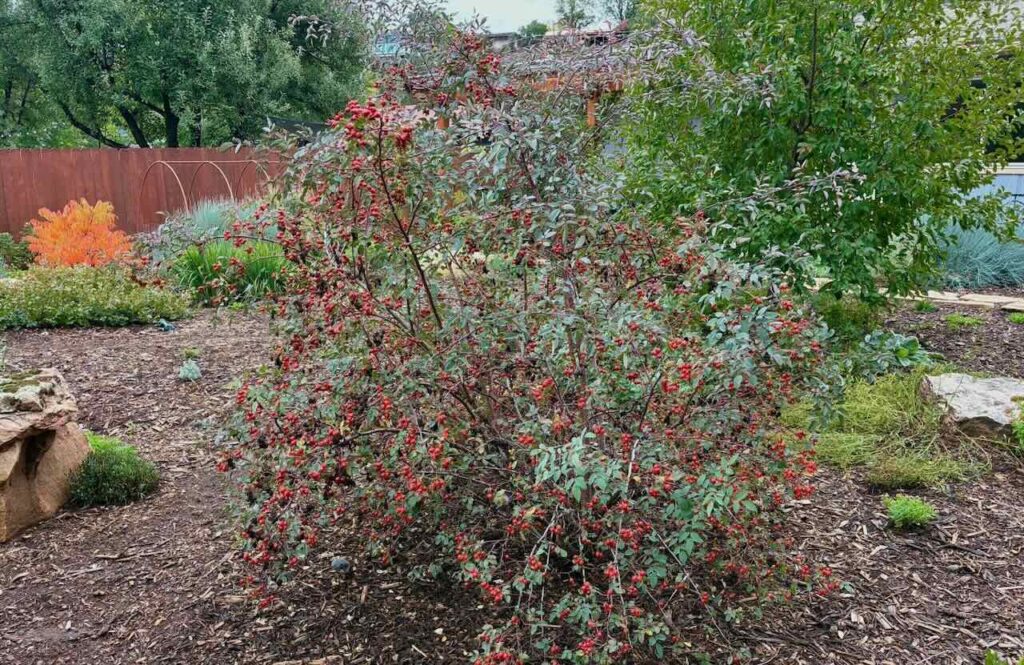
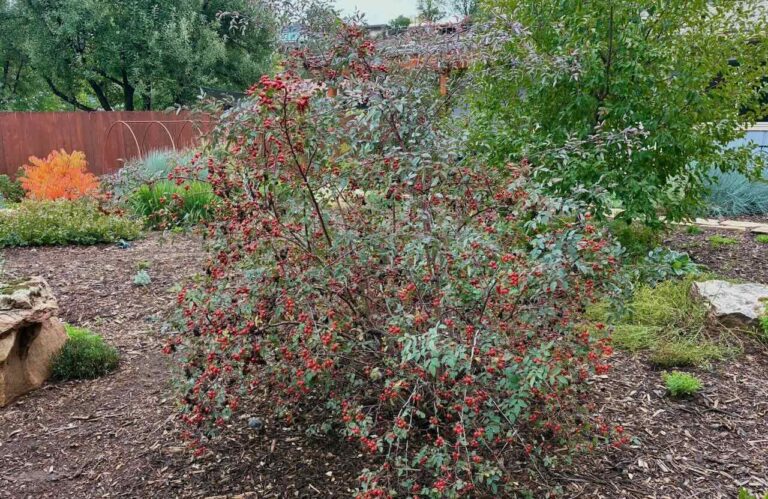
This month's pick is Red Leaf Rose — Rosa glauca — a species rose from the mountains of central and southern Europe that feels right at home at elevation here in the Rockies. It flowers in late spring, but October is when it really earns its place: the small pink blooms of June have turned into clusters of glossy, orange-red hips that hang on the arching canes well into winter, set against foliage that's starting to shift toward its fall tones.
The real standout, though, is the foliage. All season long, Red Leaf Rose carries smoky, blue-gray leaves washed with plum and burgundy, on reddish-purple canes that are nearly thornless toward the tips. At six to eight feet tall and about as wide, it makes a relaxed, arching specimen or informal hedge — and that cool, dusky color is a great foil for silver foliage or warm-toned grasses. Try it behind a drift of blue avena grass or with the gold of rabbitbrush nearby for a fall combination that glows.
Care is refreshingly simple for a shrub (also called species) rose. Give it full sun for the richest leaf color (it'll tolerate part shade), average well-drained soil, and regular water while it establishes — after that it's quite drought tolerant. It shrugs off most of the disease problems that plague hybrid roses. It isn't deer resistant, so protect young plants where deer browse, but the single flowers are a magnet for bees in early summer, and the hips feed birds through the lean winter months.
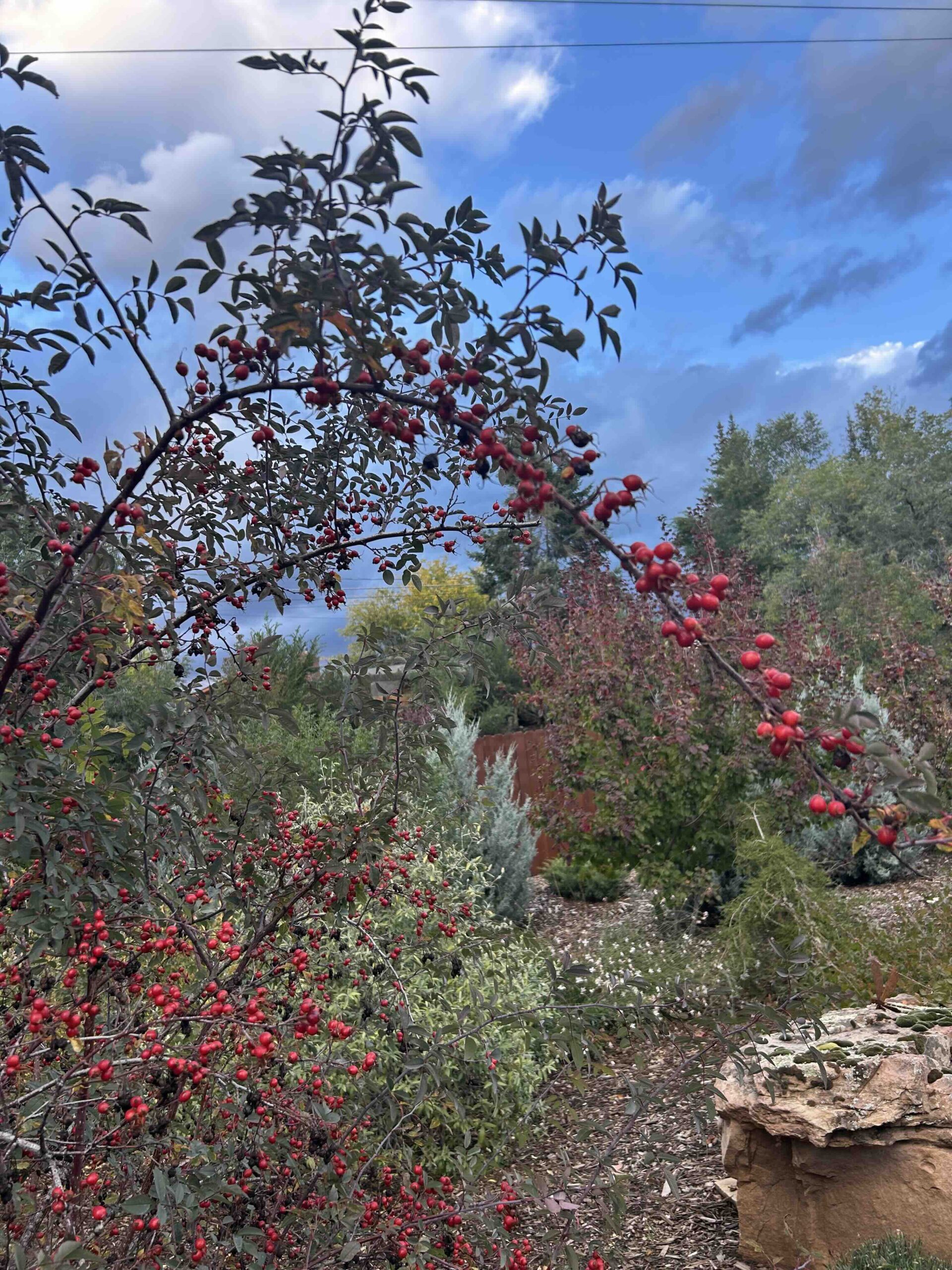
Clusters of orange-red rose hips on the arching, blue-gray foliage of Rosa glauca in fall
One tip worth keeping in mind
Resist the urge to deadhead — those spent flowers are fall's showy hips. Instead, prune in late winter by cutting a few of the oldest, woodiest canes right down to the base. That keeps the shrub open and full of young, richly colored growth, and it clears out the dead wood that would otherwise build up inside the plant.
Each month we pick one plant that earns its place in a southwest Colorado and Rocky Mountain landscape — for its resilience, its beauty, or both. Subscribe to the newsletter to get the next pick delivered directly.
Subscribe to the newsletter →