Sustainability
Durango's Living Rainscapes: Why Preparing to Catch the Rain is Vital
A self-guided tour of nine water-harvesting landscapes across Durango
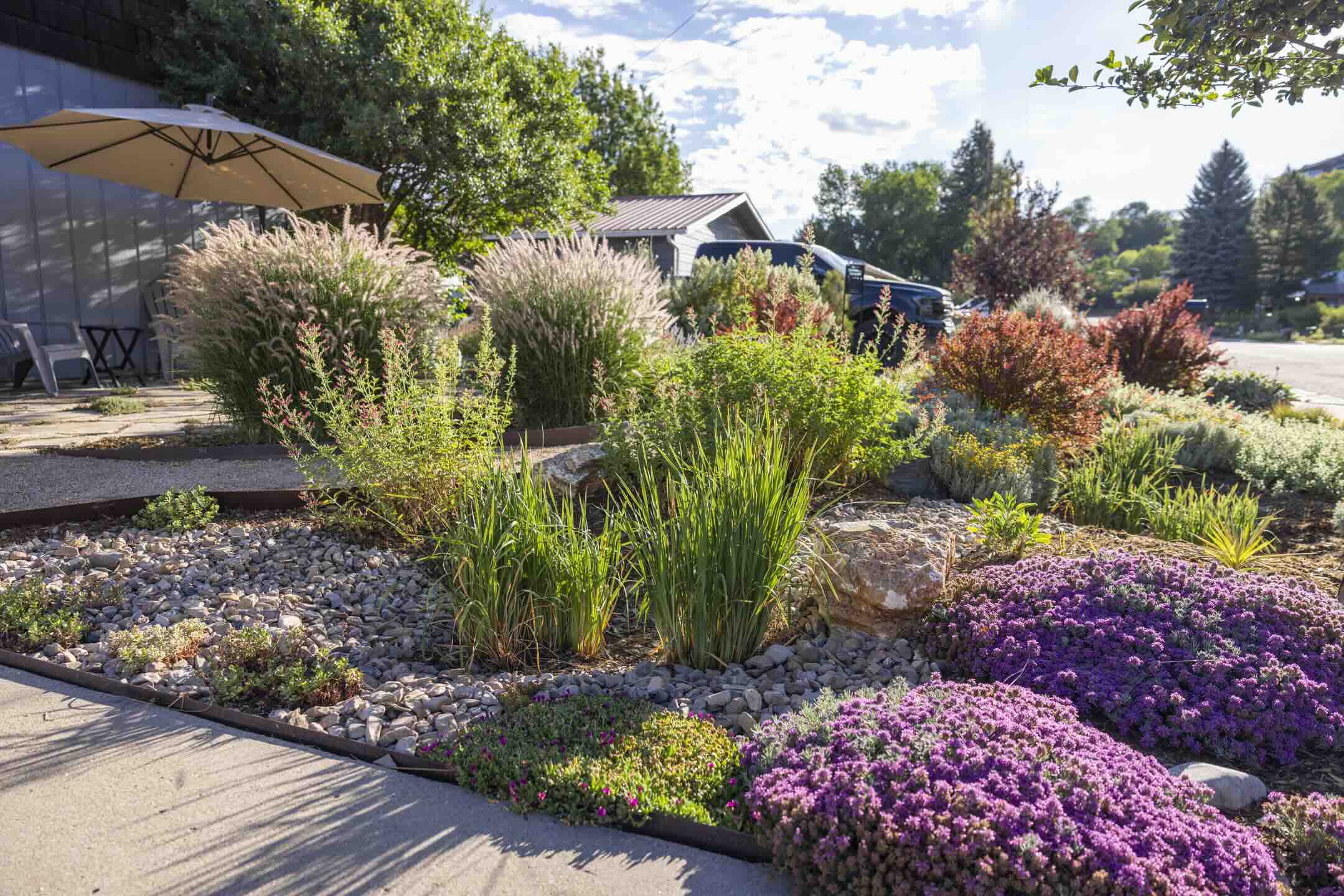
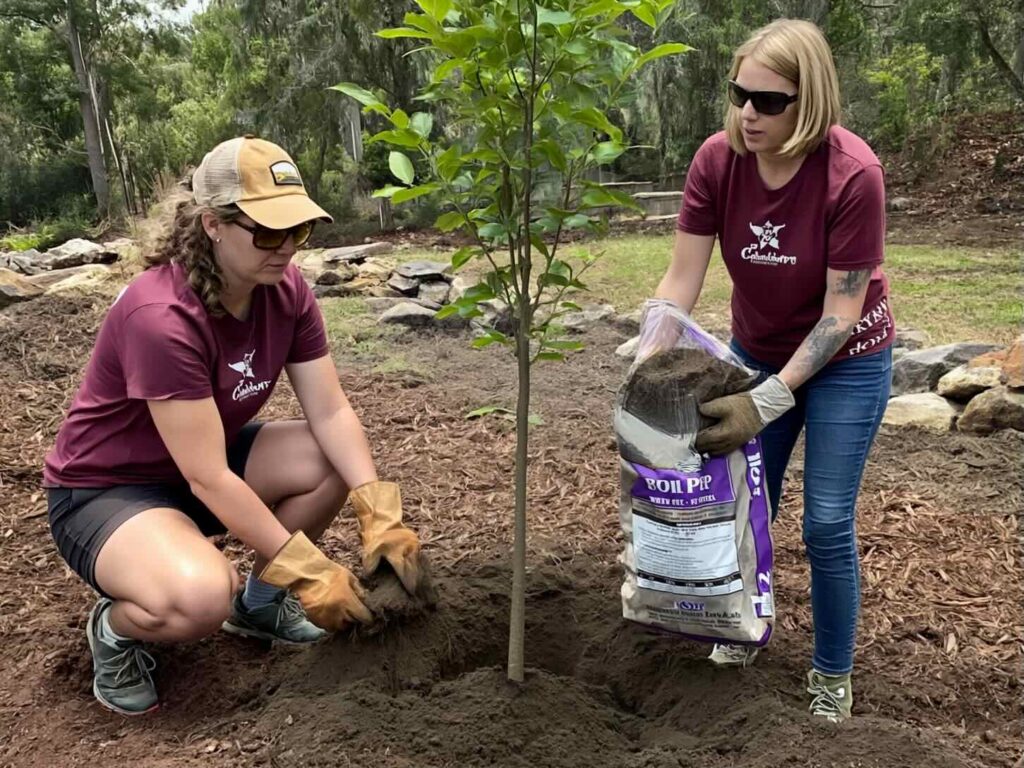
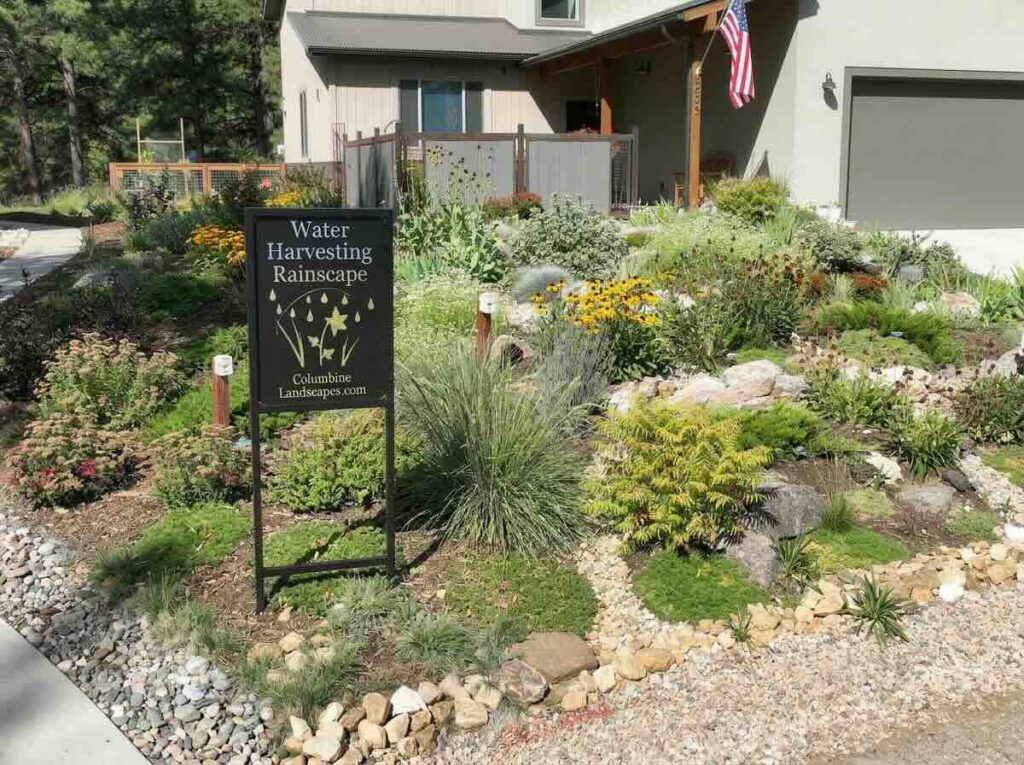
One of the nine properties on Durango's Living Rainscapes self-guided tour.
Seventy percent of the water Durango treats and pipes through the city each summer goes onto lawns and gardens. Meanwhile, Colorado's own 2026 wildfire risk assessment describes the western half of the state as being in an "exceptional drought" — the kind that happens roughly once every fifty years — layered on top of a Southwest megadrought that tree-ring records show is already the driest the region has been in 1,200 years. The 2026 fire season has already outpaced historical averages, burning more land than the previous four years combined.
Those two facts sit right next to each other for a reason. The water we're pouring onto thirsty lawns is water we don't have. And the landscapes still burning fastest are the ones that never learned to hold onto it.
This is the backdrop for Durango's Living Rainscapes, our new self-guided tour of nine water-harvesting landscapes throughout the city and beyond — part funded through the City of Durango's Impact and Resiliency Grant. Every property on the tour is different: a tight downtown lot, a sloped foothill yard, a xeric front border, specimen trees providing structure and shade. That variety is the point. None of these nine gardens needed acres of land nor the cost of installing, maintaining and running water through expensive irrigation systems. Instead, they just needed a thoughtful design that worked with the land and available water.
That's really the message underlying this whole tour: almost any landscape, of almost any size, can be reworked to slow water down and absorb it instead of shedding it, to resist fire instead of feeding it, and to support pollinators instead of excluding them. You don't need a rural homestead or a professional-grade cistern system. You need only to look at the yard you already have a little differently. Before you take the tour, we wanted to explain why that shift matters as much as it does right now.
Ready to see all nine gardens for yourself? Click here to sign up for the self-guided tour →
It's not really about the barrel
Ask most people what rainwater harvesting is for, and they'll say something about saving a bit on the water bill. That's true, but it undersells what's actually happening. A rain barrel or cistern is just the visible part, hence what pops to mind first. The real work happens in the soil.
Landscapes designed to catch and slow rainfall — through swales, berms, rain gardens, and mulched beds rather than tanks alone — build soil that holds water long after the storm has passed. Every season that soil goes untouched by heavy irrigation and instead gets slow, natural infiltration, it gets a little better at its job: holding more organic matter, supporting a healthier microbial and fungal community, and needing less water the following year. It's a compounding return, not a one-time fix.
Brad Lancaster, whose two-volume Rainwater Harvesting for Drylands and Beyond is close to the standard reference for arid-climate water harvesting, puts the emphasis exactly here: start by observing how water already wants to move across your land, and design earthworks — swales, contour berms, sunken beds — that spread and slow it, before you ever think about a storage tank. It's a philosophy built for exactly the kind of dry, rocky, high-desert terrain we garden in around Durango.
The wildfire connection nobody talks about
Here's the piece that doesn't usually make it into rainwater-harvesting articles, but matters enormously: a landscape built to hold water is, structurally, a landscape built to resist fire.
Defensible-space guidance — the 3-zoned approach that fire agencies recommend for the area immediately around a home — calls for vegetation that's low-growing, well-spaced, and consistently moist. The official language is almost always some version of "lean, clean, and green." Dry, water-stressed, dead or dying plant material is what carries fire toward a house; hydrated, well-maintained vegetation is what stops it, or at least slows it down and buys firefighters time.
A landscape built to hold water is, structurally, a landscape built to resist fire.
A rainscape does exactly the maintenance that defensible space requires, but without the water bill defensible-space irrigation usually implies. Firewise landscaping guidance actually makes this point directly: done thoughtfully, defensible-space design can reduce outdoor water use overall, not increase it. Catching and storing rain, building soil that retains moisture, and choosing well-hydrated, fire-resistant planting aren't competing goals. They're the same design challenge, solved once.
Walking the tour with this in mind changes what you're looking at. That mulched, densely-planted bed near a front door isn't just pretty — it's a fuel break that also happens to be a water-storage system.
What's happening underground
If you want the science behind why this works so well, it comes down to fungi most people never think about: arbuscular mycorrhizal fungi, or AMF. These form partnerships with plant roots in undisturbed, biologically active soil, effectively extending a plant's root system many times over. Research consistently shows AMF-colonized plants hold water better and recover from drought stress faster than plants without that fungal network — partly because the fungi exude a compound called glomalin that physically improves soil structure and its ability to retain moisture.
This network is fragile. Heavy synthetic fertilizer use and the chlorine and treatment chemicals in tap water can suppress it. The slow, gentle infiltration that comes with rain gardens and swales — soft rainwater, minimal disturbance, steady organic mulch — is exactly the condition this fungal network needs to thrive. So a rainscape isn't just storing water above ground in a barrel; it's building a living sponge below ground that gets more effective every year it's left to do its work.
Something worth celebrating
We looked into whether anything like this tour exists elsewhere, because we didn't want to overstate what we're doing. It turns out we're in good company, not solitary. Kitsap County, Washington runs a self-guided rain garden tour across its towns; the Annapolis area in Maryland has hosted a rainscaping garden tour connecting residential sites; Tucson, Arizona has a self-guided rainwater-harvesting demonstration site map through The Nature Conservancy. Good ideas tend to surface in more than one place, and we're glad to stand alongside them.
What we couldn't find anywhere — in Colorado, or anywhere in the Rocky Mountain West — was a tour like this one built around the specific, urgent combination we're facing here: a self-guided rainscape tour framed explicitly around wildfire resilience as well as water scarcity. As far as we can tell, that makes Durango's Living Rainscapes the first tour of its kind in the state, and quite possibly the first anywhere to put rainwater harvesting and fire resistance side by side as one design solution rather than two separate concerns. Given where we live, that felt like exactly the tour Durango needed to build first.
Not just water storage — habitat
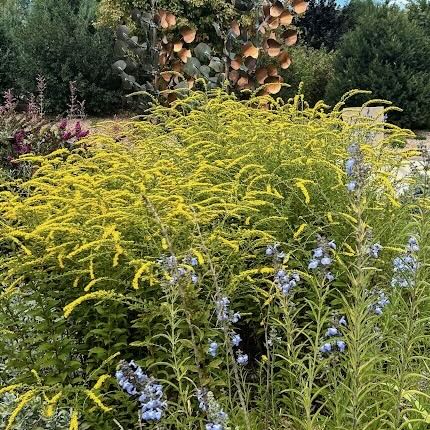
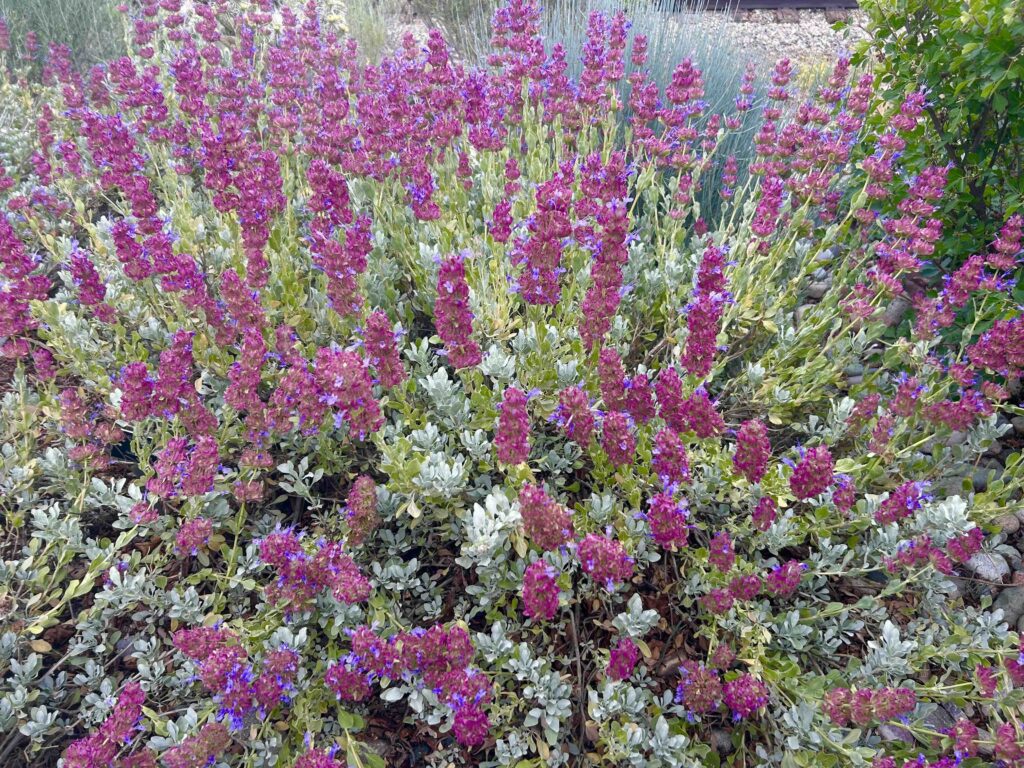
Every one of the nine gardens on this tour is also doing a third job: supporting pollinators. Native, deep-rooted plants suited to a rain garden's wet-to-dry gradient provide exactly the nectar and host-plant habitat that a mowed lawn doesn't. The Xerces Society, one of the leading pollinator-conservation organizations in the country, describes well-designed rain gardens as a genuine "win/win" — stormwater management and biodiversity from the same bed. Look for the plantings that seem a little wilder than a typical foundation bed on the tour; that's usually the point.
Why this matters beyond any one yard
Zoom out from any single property, and the case gets bigger. The EPA's research on green infrastructure — the umbrella term covering rain gardens, swales, bioswales, and permeable surfaces — shows that well-sited infiltration recharges groundwater and helps maintain the base flow of rivers and streams during dry months, which matters directly for the Animas River watershed we all depend on. It also cools the immediate area measurably: shaded, vegetated, moist ground can run 20 to 45°F cooler than bare pavement at peak summer heat. In a town heading into longer, hotter fire seasons, that's not a small thing.
What you can actually do
A few practical notes because Colorado's rules around rainwater are genuinely unusual and worth getting right:
Rain barrels have been legal in Colorado since 2016, but the rules are specific: up to 110 gallons (two standard 55 gallon barrels), per household, water used only outdoors and only on the same property it was collected on, with a sealable lid required. That limit exists because of Colorado's prior-appropriation water law — rain that falls on your roof is legally still part of the water supply that downstream, senior water-rights holders depend on. It's a real limit, not a technicality.
The good news is that barrels are only the smallest piece of what actually makes a difference — the swales, mulch, and soil-building strategies described above aren't capped by anything, and practically offer the most benefit.
The City of Durango currently offers a turf-grass replacement rebate and a discounted Garden In A Box kit program through Resource Central, aimed at exactly this kind of conversion. If the tour inspires you, these programs are a good place to start.
Ready to see all nine gardens for yourself? Click here to sign up for the self-guided tour →
Frequently Asked Questions
Why bother with rainwater harvesting when it doesn't rain here?
Durango actually gets more precipitation than people assume — the issue is timing, not total volume. Rain tends to arrive in short, intense bursts (especially during the summer monsoons), which means most of it runs off hard, dry soil before it ever has a chance to soak in. Rainwater harvesting isn't about relying on frequent rain; it's about capturing the rain that does fall, in the narrow window it falls, so it can be used over the weeks of dry weather that follow. In a low-rainfall climate, that timing gap is exactly why harvesting matters more, not less.
Is rainwater harvesting legal in Colorado?
Yes. Since House Bill 16-1005 passed in 2016, Colorado homeowners can collect rainwater in up to two rain barrels with a combined capacity of 110 gallons. The water must come from a rooftop downspout, be used outdoors, and stay on the same property where it was collected. The cap exists to protect downstream water rights under Colorado's prior-appropriation system.
Does rainwater harvesting help with wildfire risk?
Yes! Defensible-space guidance recommends keeping vegetation near a home low, well-spaced, and consistently hydrated, since dry and stressed plants carry fire more readily than moist, healthy ones. Landscapes designed to capture and slowly release rainwater — through swales, mulch, and soil-building — support exactly this kind of moist, resilient planting, often while using less irrigation water overall than a conventional landscape.
Is rainwater actually better for soil and plants than tap water?
There's good evidence for this. Rainwater contains nitrates, a bioavailable form of nitrogen that acts as a natural fertilizer, enhancing plant growth when absorbed through leaves or roots. In contrast, the treatment chemicals used in municipal water actually suppress the beneficial soil fungi and bacteria over time. Landscapes that rely on slow rainwater infiltration rather than heavy irrigation tend to support stronger mycorrhizal fungal networks, which measurably improve a plant's drought resilience.
What's the difference between a rain barrel and a rain garden?
A rain barrel stores water above ground in a container for later use, usually to hand-water plants. A rain garden is a shallow, planted depression designed to catch runoff and let it infiltrate directly into the soil where it falls, supporting deep-rooted native plants and pollinator habitat in the process. Most well-designed rainscapes use both — barrels for active use, gardens and swales for passive infiltration.
What is the difference between a rain garden and a rainscape?
A rain garden is one feature: a shallow, planted depression designed to catch and infiltrate runoff from a specific source, like a roof or driveway. Whereas a rainscape is the bigger picture — the entire landscape designed as a connected water system, including rain gardens alongside other water harvesting features like swales, berms, mulched beds, rain barrels, and permeable paths, all working together to slow, store, and spread water across the landscape. Put simply: a rain garden is a single tool, and a rainscape addresses the whole landscape and treats it as a system within the integrated whole.
Does a rain garden attract pollinators?
Yes, when planted with native species suited to its wet-to-dry moisture gradient. Rain gardens are one of the few landscape features that manage stormwater and provide meaningful pollinator habitat at the same time, which is why conservation organizations like the Xerces Society actively recommend them.
Are there rebates available in Durango for water-wise landscaping?
Yes. The City of Durango currently offers a parking strip turf grass replacement rebate program and a discounted Garden In A Box kit program through the nonprofit Resource Central, both aimed at converting high-water landscaping into drought-tolerant, water-wise design.
Do I need a large property to build a rainscape like the ones on the tour?
No. The nine gardens on Durango's Living Rainscapes tour range from small city lots to larger foothill properties, and several of the most effective techniques — mulched beds, swales, native plantings, a single rain barrel — work at any scale. The goal of the tour is to show that almost any landscape can be designed to slow runoff, resist fire, and support pollinators, regardless of its size.
Is this the first tour of its kind?
Self-guided rain garden and rainwater-harvesting tours exist in a few other US communities, including Kitsap County, Washington and the Annapolis area of Maryland. As far as we've been able to find, Durango's Living Rainscapes is the first such tour in Colorado, and the first anywhere to build its case explicitly around both water scarcity and wildfire resilience together.
Durango's Living Rainscapes — Launches August 2026
Walk all nine gardens for yourself.
Durango's Living Rainscapes tour launches this month, made possible by the City of Durango's Impact and Resiliency Grant. Registered visitors receive the full interactive map, with all nine locations, direct to their inbox. And once you've walked it, we'd love to know what you think — tell us your favorite stop, the idea you're stealing for your own yard, or the question the tour left you with. We read every reply.
Click here to sign up for the self-guided tour →