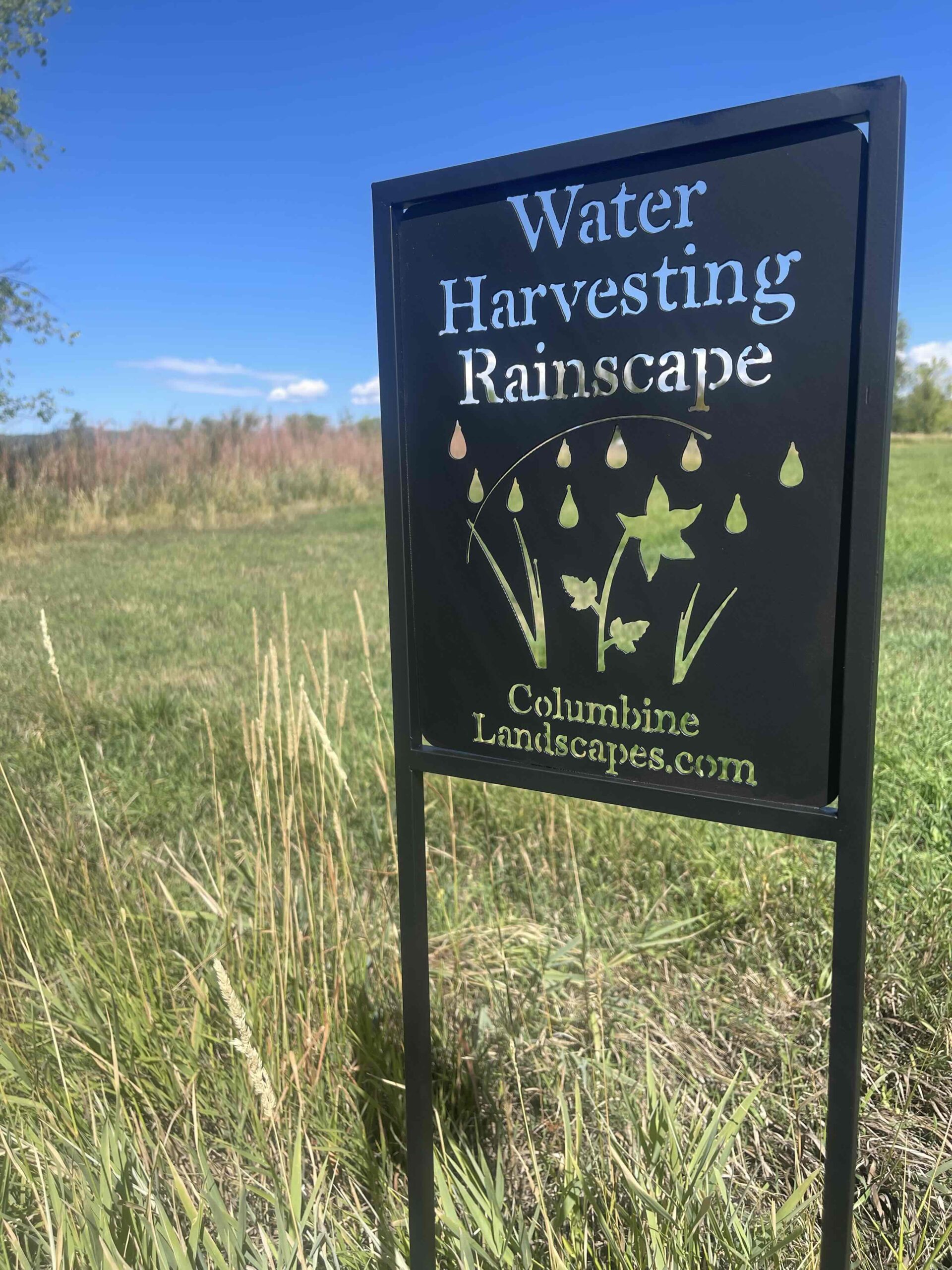
Design Rainscapes

Water Harvesting
Landscapes

We design landscapes that slow, spread, and absorb water — so the land stays vital, plants root deeper, and every drop of rainfall becomes an asset rather than runoff.
Start a conversation →
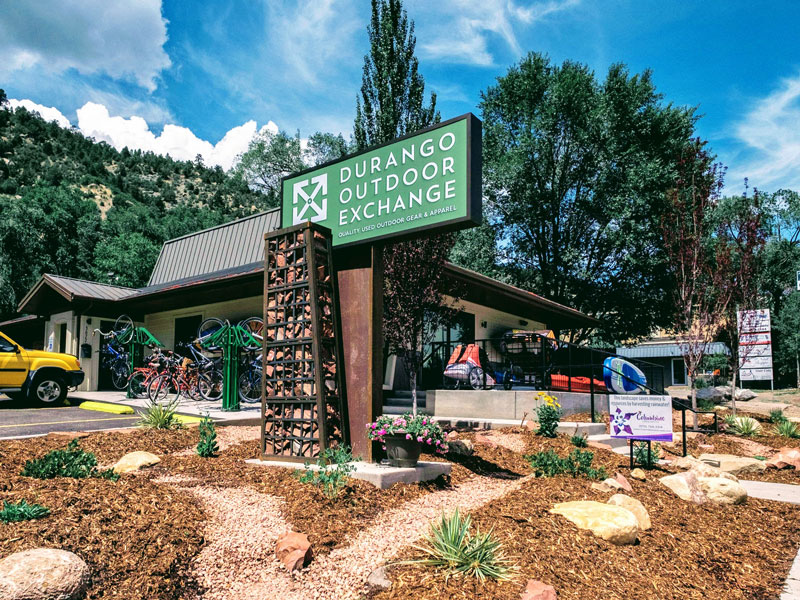
After — planted and mulched rain garden
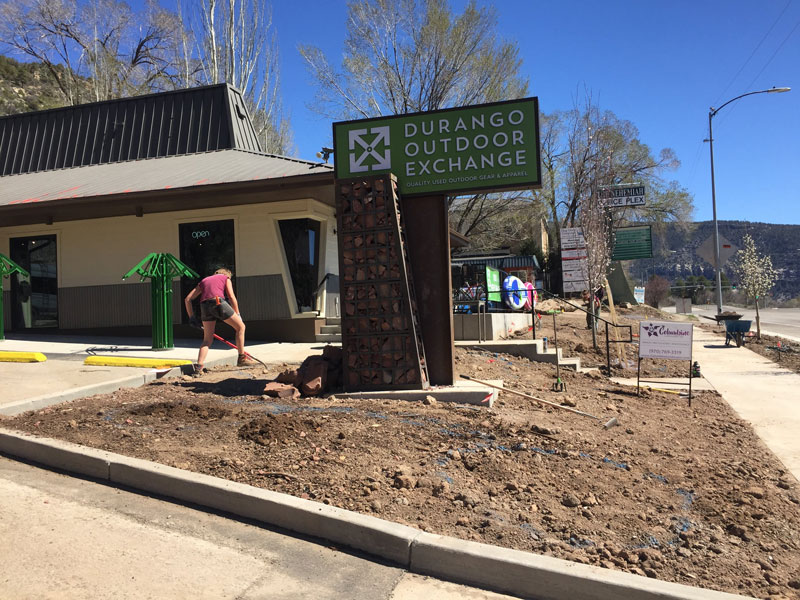
Before — bare earth
Before After

Rain is not a problem to be managed. It is a resource to be received.

At Columbine, every landscape we design is conceived around a fundamental principle: that a well-made garden should work with the hydrology of its site, not against it. Through careful earth-sculpting, thoughtful grading, and the strategic placement of swales, berms, and planted basins, we create conditions in which rainwater slows, spreads across the land, and sinks into the soil — feeding root systems, recharging the water table, and reducing the dependence on supplemental irrigation.

The result is a landscape that is genuinely self-sustaining. One that responds to the rhythms of the climate it inhabits rather than struggling against them.

68
Gardens designed since 2019
441,742 gal
Rainwater harvested per year
Certification

Certified Water Harvesting Practitioners

Since 2019, six members of the Columbine team have completed an intensive seven-day Water Harvesting Practitioner Certification programme in Tucson, Arizona — one of the most rigorous professional qualifications available in this discipline. The course demands a two-part examination, and every Columbine practitioner passed.

This investment reflects something we believe deeply: that ecological stewardship is a craft, and that craft requires dedicated study. When you engage Columbine, you are working with a team who have spent years learning not only how to make landscapes beautiful, but how to make them genuinely resilient.

Columbine team at Water Harvesting Practitioner Certification, Tucson

Why Water Harvesting Changes Everything

A landscape designed to harvest rainfall behaves differently from one designed simply to look good. Plants establish more quickly and root more deeply because the soil beneath them holds moisture between rain events. Irrigation systems, where they are used at all, run far less frequently and operate more efficiently. The soil itself becomes healthier over time — richer in organic matter, more resistant to erosion, and better able to support the complex web of life that makes a landscape truly alive.

In fire-prone terrain, this matters acutely. A well-hydrated landscape is a more fire-resilient one. The difference between a landscape that holds its water and one that sheds it can, in extreme conditions, be the difference between a garden that survives a fire season and one that does not.

These are not incidental benefits. They are the intended outcomes of a design philosophy that takes the land seriously as a living system.

Work With Us

Every garden begins a conversation

We would be glad to walk you through what a water harvesting approach might look like on your property. Every site is different — the topography, the soil, the existing plantings, the microclimate — and we work site-specifically from the very first conversation.

Start a conversation
Columbine Landscapes Co Durango, Colorado
Get in touch [email protected]
Tiffany Studio Manager