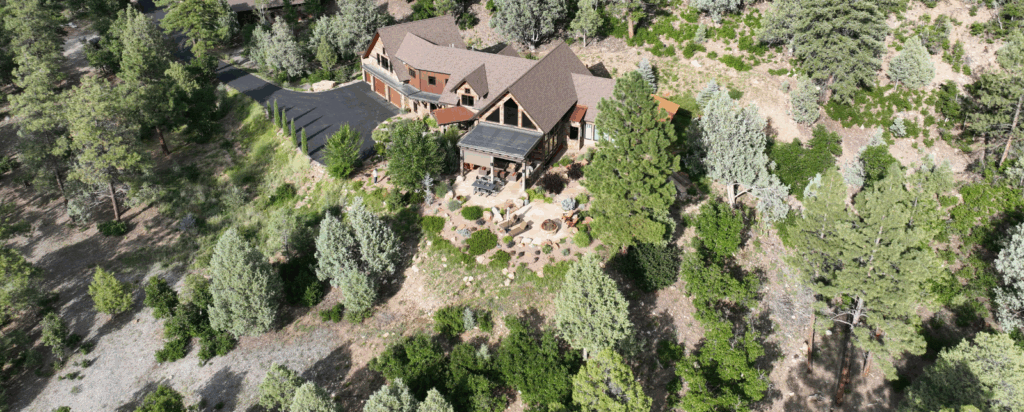
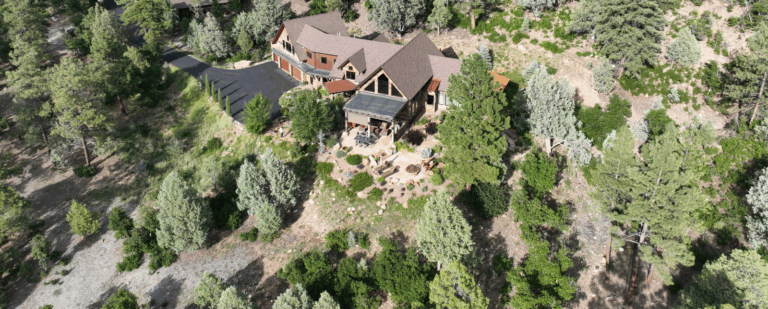
There are so many opportunities in each of the 3 firewise defensible zones. As I’ve detailed in the previous months’ articles for zone 1 and zone 2, zone 3 has it’s own guidelines that will help you have a beautiful, graceful, and firewise landscape. It’s further out than zones 1 or 2, but it’s still closer than the back 40, so it’s still important to tend to as you work to keep you and your loved ones (and let’s be honest – stuff) safe.
WHAT IS ZONE 3?
Defensible firewise zone 3 is the ring surrounding your home that starts at 30 feet out and ends at 100 feet away from your home. A lot of homes, like mine, do not have a zone 3. The land I call mine ends before the 30 foot mark. But for those of you who do have a zone 3, relish it!
Zone 3 is a terrific space for expressive, exciting waterwise native shrubs. I love shrubs for this zone because most of them are big enough that you can see them from your house, deck, or patio,where you presumably spend most of your time. They tend to require little maintenance which is nice not to have to overly coddle something you don’t often see up close.
I specifically recommend natives here especially because so many people in the Durango area live in the Wildland Urban Interface (WUI). I think it looks just plain weird to have a sharp line between manicured domestic landscape and the wild beyond. Zone 3 is where a blend can occur for a natural transition.
Those of us who do not have a zone 3, likely have neighbors. This is a get-to-know-your-neighbors-sort-of-time! Working together to create a collaborative zone 3 helps everyone involved. I know, this can be hard for some folks. If you’re one of those, take some fresh baked cookies and a print out of this article to start the conversation on the right foot. I’m very lucky to know and like all my neighbors in my tightly packed one-block-long street. We chitchat in the street and watch each other’s pets when we go out of town. It’s such a gift when you can be on the same team with the people who spend their lives so close to yours.
WHAT TO DO IN ZONE 3
Selection: Remove highly flammable plants and replace them with flame resistant species. Don’t worry, a future blog article this summer will go into detail on the best plant options and how to tell whether a plant is flammable or firewise.
Plant health: Make a habit of removing the 3 D’s: Dead, Diseased, and Damaged from your woody plants. Of course, sometimes the whole plant is in one of these categories and should be removed. This applies to all 3 firewise zones and a healthy landscape in general.
And remember, even xeric/waterwise landscapes benefit from supplemental water during drought. This is especially important when firewise is the goal.
Tree placement: To reduce the ability for fire to spread, it is important for trees 30-60 feet from the home to have at least 12 feet between canopy tops and trees 60 to 100 feet from the home to have at least 6 feet between canopy tops.
If you need to remove trees to fit these guidelines, depending how many you have that should go, we recommend making a plan of one or a few to remove each year. This lessens the aesthetic shock of doing it all at once, and still improves your firewise condition.
Other elements in your landscape: Of course you can turn those removed trees into firewood. If you can’t use it, maybe your neighbors can. Firewood and propane tanks should be placed on gravel or concrete pads within zone 3; in other words, they should be at least 30-feet away from structures. Surrounding them with non-flammable fencing is a recommended precaution.
SITTING PRETTY
Follow these steps for your zone 3 space and you’ll be sitting much prettier and you just might make friends out of the people who live nearby too. So all in all, when you tally it up, there’s not much to lose in stepping up your defensible zone 3 landscape game. And you can be glad you can leave the back 40 as is…unless you want bonus points, you can always apply these guidelines there too if you have nothing else to do, or just love it so much you can’t stop.