If you haven’t already noticed after reading our last firewise article, my intention is to fill you with hope and inspiration regarding your firewise landscape. I know it is easy to have a rather dour demeanor in regards to the matter, and no wonder, with so much focus typically on all that we can’t do, and all the places are not supposed to have plants. AND there’s an upside, well, in addition to not having your house burn down. It’s that upside we’re focusing on here, and it’s for real!
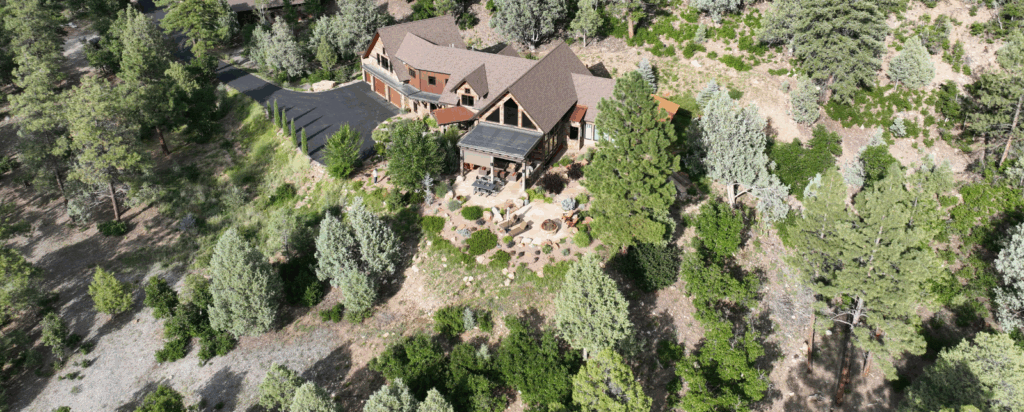
In brief, defensible zone 2 is further away from your home than zone 1 – zone 2’s range is 5 feet to 30 feet from the house – and, unlike zone 3 (30-100 feet out), zone 2 is still close enough that you can intimately experience it. You can easily see your bulbs going gangbusters in spring from inside the windows; you can smell the delightful fragrances of mock orange and lilac wafting into the house, and as you walk up the front path; you can hear and see the hummingbirds zoom, bumblebees buzz, and butterflies flutter as you soak in the biophilic nature from your deck or patio.
So, now that we have established that zone 2 is the sweet spot, what should you plan for there, and how do you do it?
DESIGN
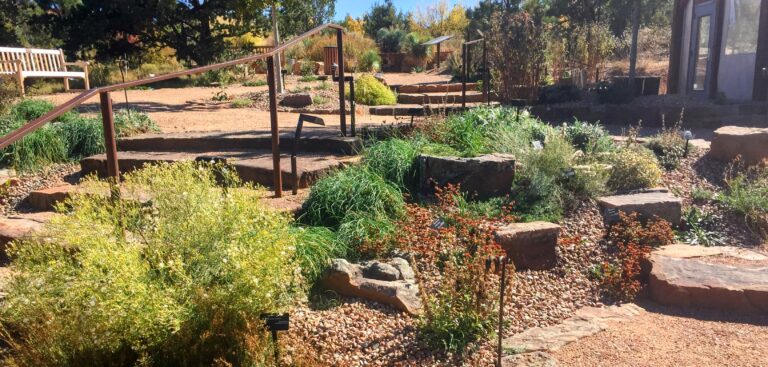
Islands. Group fire resistant plants in islands throughout zone 2.
Hardscape. Surround the islands of plantings with non-flammable hardscape such as brick, flagstone or pavers.
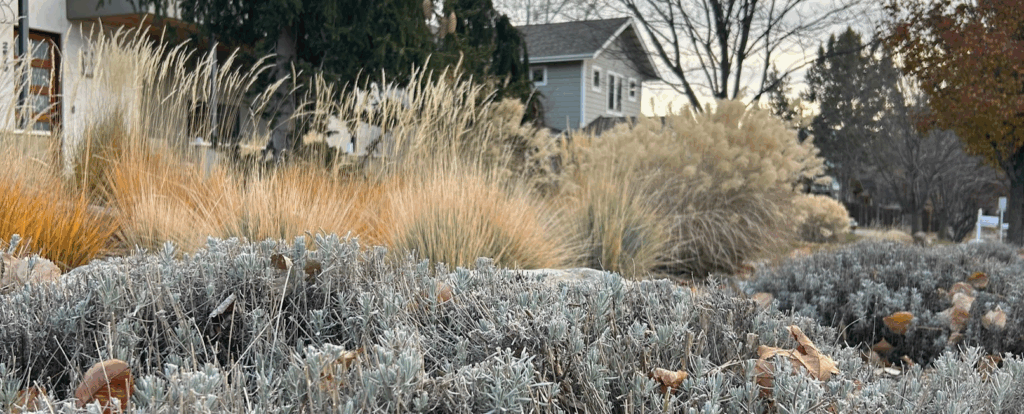
Low-growing alternative lawn. Another option to surround the islands with is 4 inches or shorter groundcover that’s watered enough to stay green. Avoid plants that need to be mowed, and go with the right plant, right place approach by choosing groundcover plants that naturally stay shorter than 4 inches. Some good options include Dog Tuff grass, pussytoes, thyme, and veronica.
Boulders. Boulders make great no-maintenance, fire-resistant accents throughout the landscape; in the island beds, on the perimeter of them, and as part of the rain-harvesting earthworks that is essential for every firewise landscape.
Hydrated plants and soil – This is a great zone to leverage the passive power of rain basins for keeping land and landscapes full of water. Anytime it rains, these basins exponentially maximize the benefits of that moisture by slowing and spreading it through the landscape. The goal is to keep all the rain on-site so it can soak in deeply.
Spread woodies out. Avoid clustering trees and mid-height to tall shrubs together; trees should be placed far enough away that when mature, the canopy is at least 10 feet from any structure.
MAINTENANCE
Pruned and groomed is the idea in zone 2. Staying on top of the removal of dead, diseased, and damaged branches will help eliminate potential fuels and plant parts that won’t properly hydrate. Cutting back plants like Chamisa annually is a good practice, so that there is little woody material lingering; instead you’ll generate all fresh green growth each year.
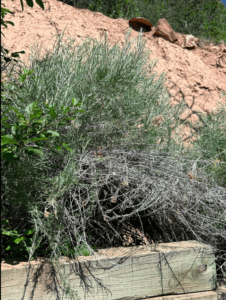
This Chamisa has not been cut all the way back for several years, if ever. The resulting build up of woody branches at the base are a fire risk.
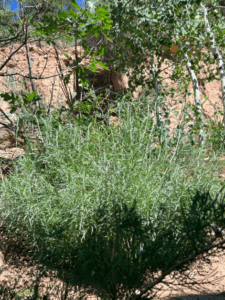
This Chamisa was cut back early this spring causing all the growth to be green and fresh and firewise. This is an example of the “lean and green” maintenance approach.
Many shrubs should be properly pruned each spring to remove the largest, oldest canes or branches to stimulate new fresh growth. As with the Chamisa, the new growth is more succulent, and healthy. Lean, clean, and green is another way of remembering this guidance.
These maintenance steps not only improve your firewise status, but they also keep your landscape as a whole healthy, thriving, and attractive.
There are many upsides to designing and maintaining defensible zone 2 according to firewise principles. A little more hardscape than you may otherwise have considered results in less maintenance, and attractive year round structure. Planning and installing techniques to make use of the rain that falls on your site helps your plants thrive while saving you money and time. And upping the ante on your maintenance has the added advantage of a fresher tidier look. In summary, zone 2 presents many opportunities for an amazing, gorgeous, bursting-with-nature’s vibrance landscape; it’s not too close to the house, and it’s not too far to feel immersed in from your living space in and around your home. It’s just right!