Choosing the right plants for your firewise landscape goes a long way to increase fire resiliency when combined with the guidelines I’ve detailed in the last 3 articles regarding defensible zones 1, 2, and 3. Firewise means fire resistant, or less flammable. Although some plants are less prone to catching fire, all plants can catch fire when certain conditions exist.
Carefully selecting less flammable plants and positioning them well in the landscape provides the best chance to have a beautiful landscape while decreasing the risk of fire. Firewise plants exist in all forms, from bulbs to perennials, to shrubs and trees. They are as attractive as any other plants, and the good news is that if you are in love with a particular plant you learn is not-so-firewise, there is bound to be a good replacement with a similar shape, size, form, and color. While there are many Rocky Mountain fire-focused organizations that provide lists, of course our designers here at Columbine can help you find what you’re looking for.
Traits of less flammable plants:
- Low-growing with a compact growth form – think Autumn Amber sumac
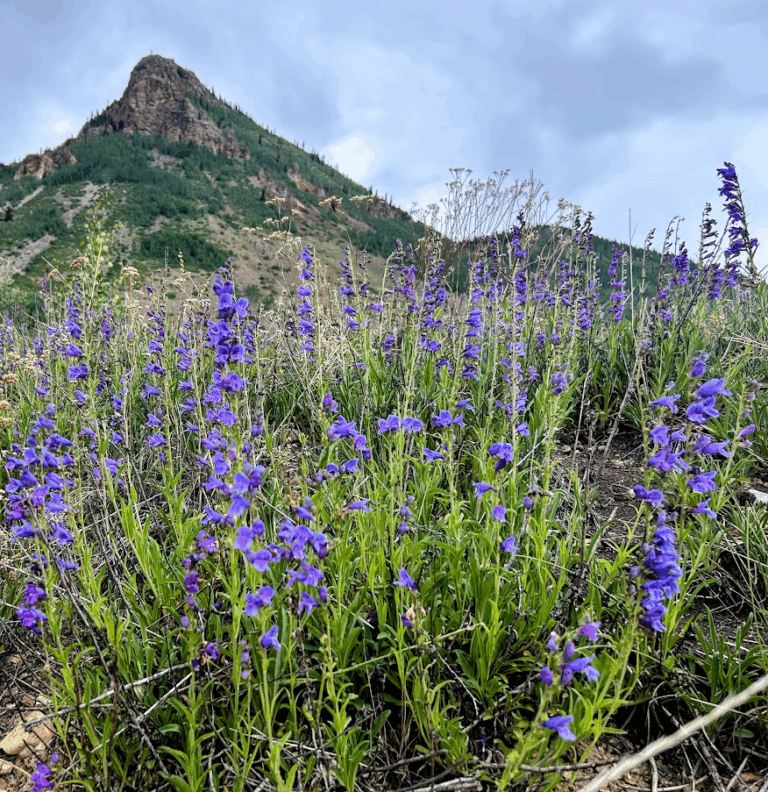
2. Xeric, meaning they not only tolerate dry conditions, but they prefer them – think so many gorgeous, no fuss native plants, like Rocky Mountain penstemon which I’ve seen blooming their striking blue heads off for weeks now up near Silverton.
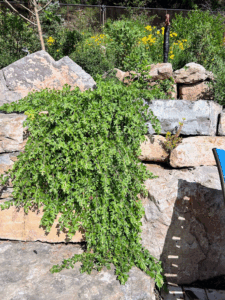
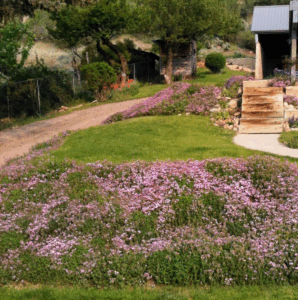
3. High pectin or soap content – think soapwort
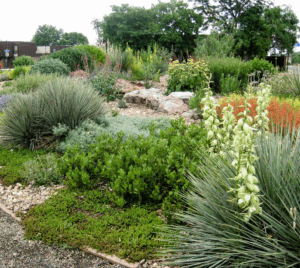
4. Green stems – think yucca
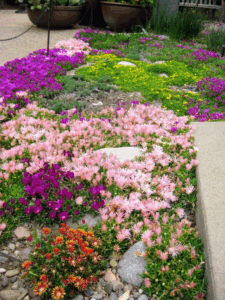
5. High moisture content in their leaves – think cactus and other succulents like ice plant.
Although some plants are inherently less or more flammable by nature, your care of your plants plays a much bigger role in their fire-resistance than their innate characteristics.
Key steps to take to result in greater fire resistance:
- Keep your plants well-hydrated with mindful irrigation practices, such as rainwater-harvesting earthworks. Too often we see a “set it and forget it” approach, which can be fatal during extended hot, dry spells—plants show signs of severe drought stress, and some don’t survive. Pay attention to weather shifts: if you’re feeling the heat, your plants probably are too; when it cools and you reach for an extra layer, they likely need less water.
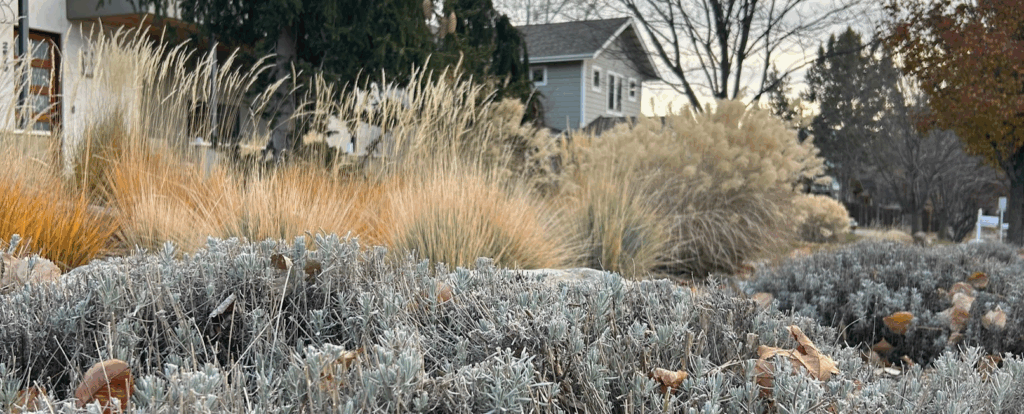
- Remove any dead vegetation—both what’s attached to the plant and what has blown in, settled on the branches, or collected at the base. We often see fallen debris from nearby plants caught in junipers, which only adds to their already high flammability. Think of it as good garden “feng shui” to clear out that old brown material—keeping things neat not only looks better but also reduces fire risk.
In summary, the ultimate firewise landscape may be more about what you do than what you have, AND there are a lot of fantastic planting options for a firewise landscape as long as you follow some basic guidelines. Who knew a firewise garden could be a zen garden at the same time? Does this count as multi-tasking? If it does, I’m in!
*an ancient Chinese practice focused on creating harmony and balance within a space by strategically arranging objects and the environment. It’s rooted in the belief that a well-arranged space, aligned with natural energy flows (Chi), can positively impact one’s life.