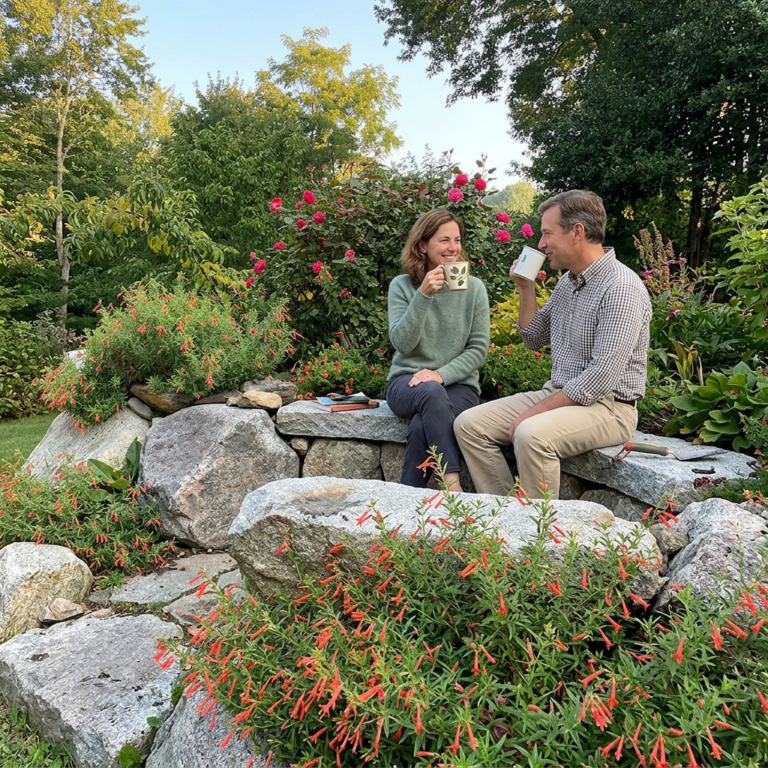
Seating Walls: Water-wise & Wildfire Resilient Architecture
Landscape design is at its best when beauty and function come together. A seating wall does exactly that — it’s a place to sit, a piece of architecture, a water management tool, and a fire-resilient landscape element all at once. In a season when Durango is being asked to think carefully about how we use and manage the land around our homes, the seating wall is a feature worth taking seriously.
Architectural beauty that earns its place
A seating wall built from local stone brings color, intention and permanence to a landscape. It defines space without enclosing it — creating rooms in the garden, framing planting beds, and a place to pause in nature. Unlike garden furniture, a stone seating wall becomes part of the landscape itself, mellowing with age, connecting landscape with geology. At 18–24 inches in height, it works at exactly the right human scale — comfortable to sit on, easy to lean against, and low enough to preserve views of the surrounding landscape.
A rainwater harvesting asset
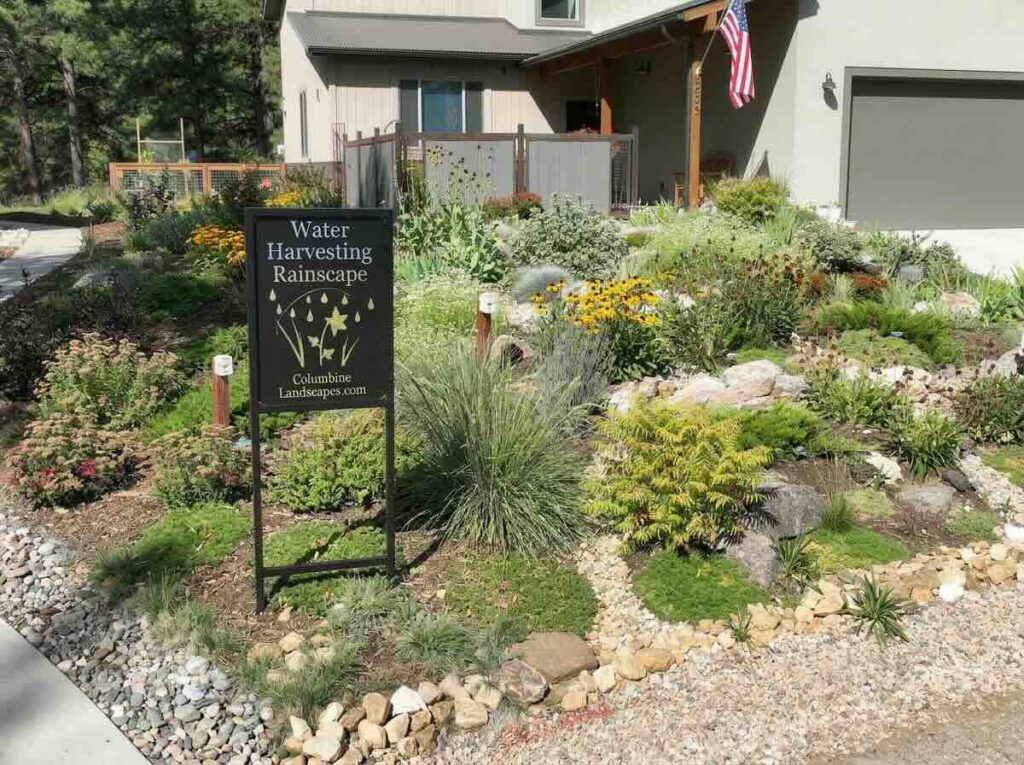
Positioned along a contour or at the downhill edge of a planting bed, a stone wall slows the flow of water across the surface, encouraging it to percolate into the soil rather than run off the property. In a dry year, that captured moisture can make a meaningful difference to the plants on either side. We often design seating walls as the uphill edge of a swale or infiltration basin, so that even a brief afternoon shower is an opportunity to recharge the landscape.
Firewise by design
Stone does not burn. In the zones immediately around a home — where fire-resilient landscaping matters most — replacing flammable groundcover and dense shrub plantings with hardscape is one of the most effective things a homeowner can do. A seating wall creates a non-combustible zone that interrupts the path a ground fire might travel, while also providing a clear visual and functional boundary between managed planting and the wider landscape. Combined with gravel mulch, drought-adapted natives, and careful spacing of plants, it becomes a cornerstone of a defensible space that still looks and feels like a garden.