
In my role running a company like Columbine, I often think I should have all the answers, but the fact of the matter is, I don’t. One thing I love about the work we do is that there’s always more to learn. As our understanding grows on things like what it means for a landscape to be firewise, and how to be conscientious stewards of this incredible planet, my approach to our work also evolves.
And recently, I’ve been having a hard time reconciling how to do all the right things for the landscape, ecology, and human safety in the face of wildfires. Even after Durango’s local “416” fire in 2018, I was still advocating for living mulch – which I still love for functionality, beauty and ecology, but as I’ve been getting more intimate with the firewise guidelines, I’ve had to come to terms with these goals and ideals not always being compatible.
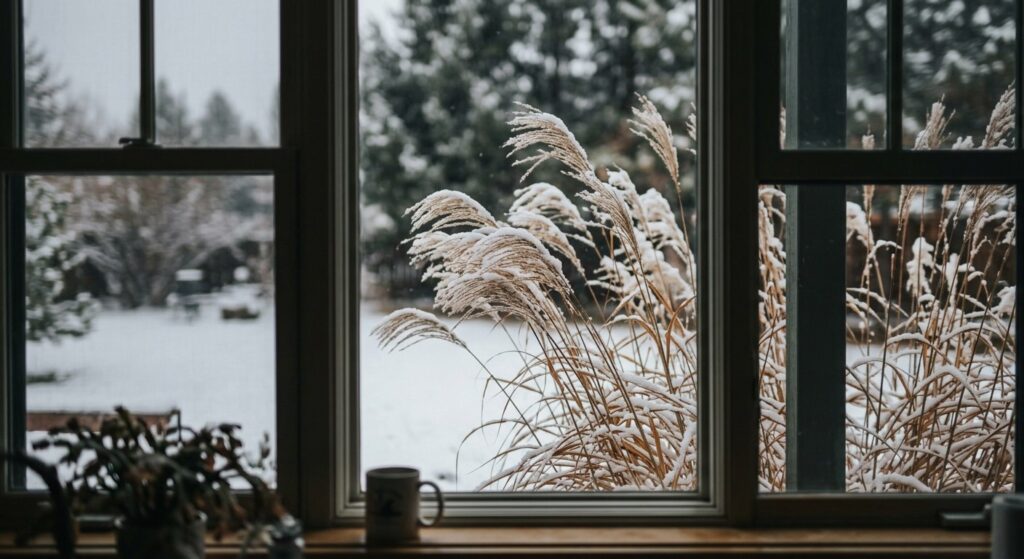
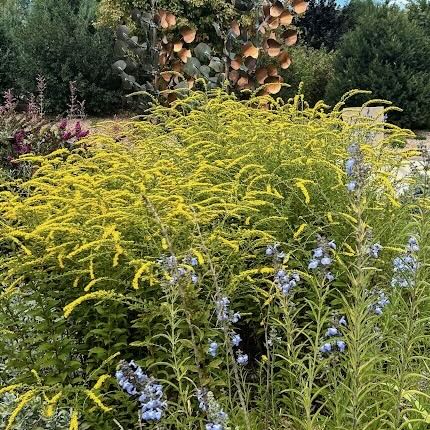
Specifically, there’s winter interest, which I am a passionate advocate of; in fact it was the subject of a talk I gave for a conference at the Idaho Botanic Gardens a few years back. The visual interest in the winter garden is enhanced by leaving the late fall remnants of perennial flowers and grasses standing throughout winter, to be cut back in spring. Advocating for this approach to fall garden habits has felt like a much needed sea change that is in sharp contrast to the traditional practice of more-or-less clear cutting the garden and calling it fall clean up.
But the Boulder County Marshall fire that took place on Colorado’s Front Range in December 2021 put all that into question. The dry stems, stalks, and seedheads are lovely; they feed the birds and the hollow stems provide safe winter refuge for the pollinators to lay their eggs in. And they are all also fuels for fires that seem to be able to spark up any time of year these days.
I struggle with humans’ taming, control, and suppression of nature. I want to leave those dried perennials standing for the winter, I really do, but it seems that most would say the only reasonable thing is to once again put our human lives and homes first and cut them back in fall after all. Further, the conundrum is that our human lives deeply depend on ecology being intact. Without healthy pollinators, our food supply is in serious jeopardy. We depend on healthy ecology for our sanity – as we know from biophilia, time spent in nature brings us a greater sense of well being, more peace, better concentration, and improved overall health.
This is one example of the moral dilemmas that those of us in the green industry who try hard and care a lot and strive to be in touch with the latest information, and make responsible, ethical decisions grapple with.
Of course, you get to make your own decisions based on your priorities and comfort level with the risks and repercussions of the various options. The direction we have chosen here at Columbine, we hope, strikes a balance. Our plan is to responsibly tend to the fall garden by cutting back perennials and removing fallen leaves in defensible zone 1 and zone 2. If you recall, these are the zones closest to structures, encompassing a 30 foot perimeter around them. The space beyond 30 feet falls into defensible zone 3 and we will leave perennials standing for the winter as a contribution toward enriching nature’s rhythms and processes.