
Explore each garden in order, or jump around
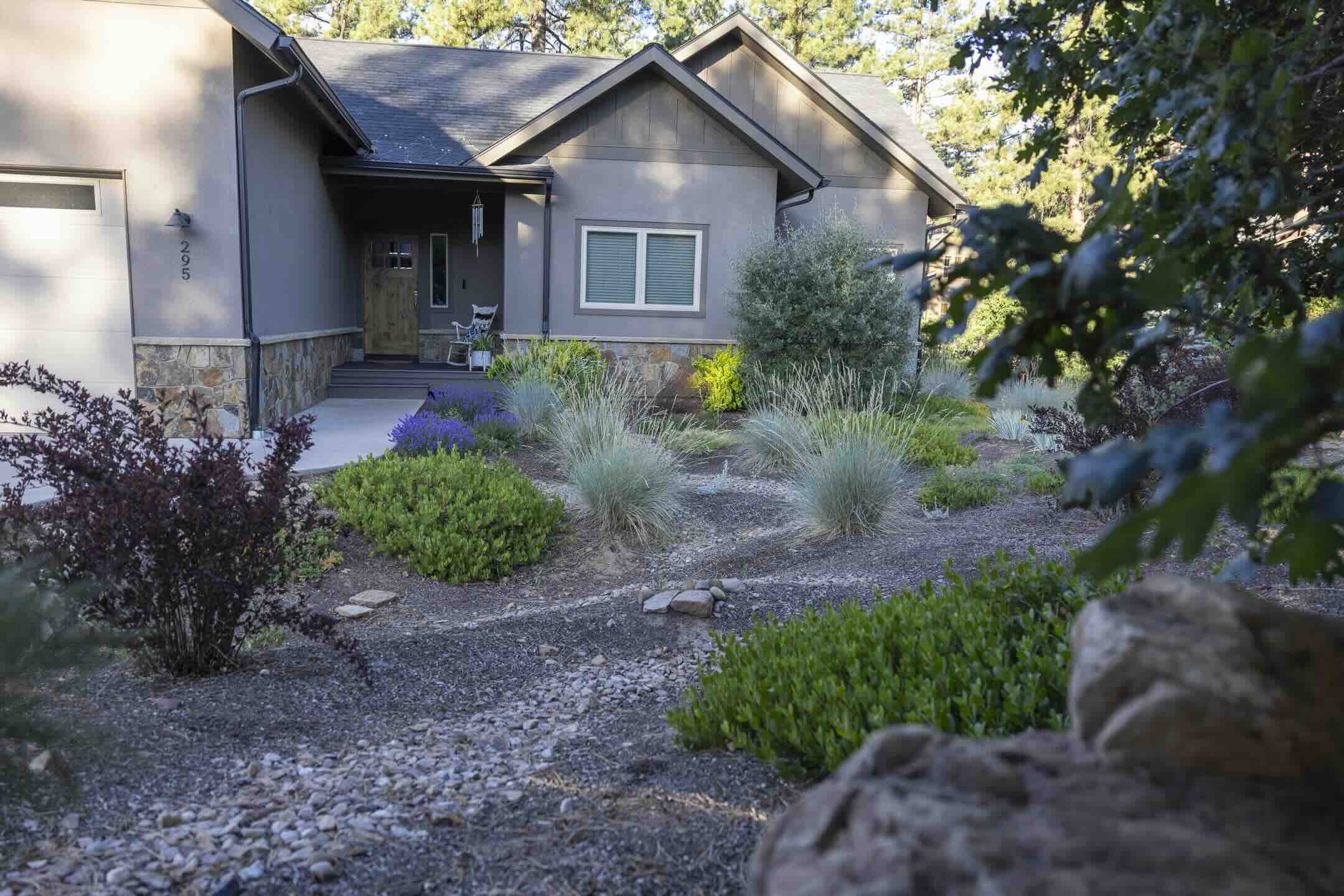
Edgemont Highlands
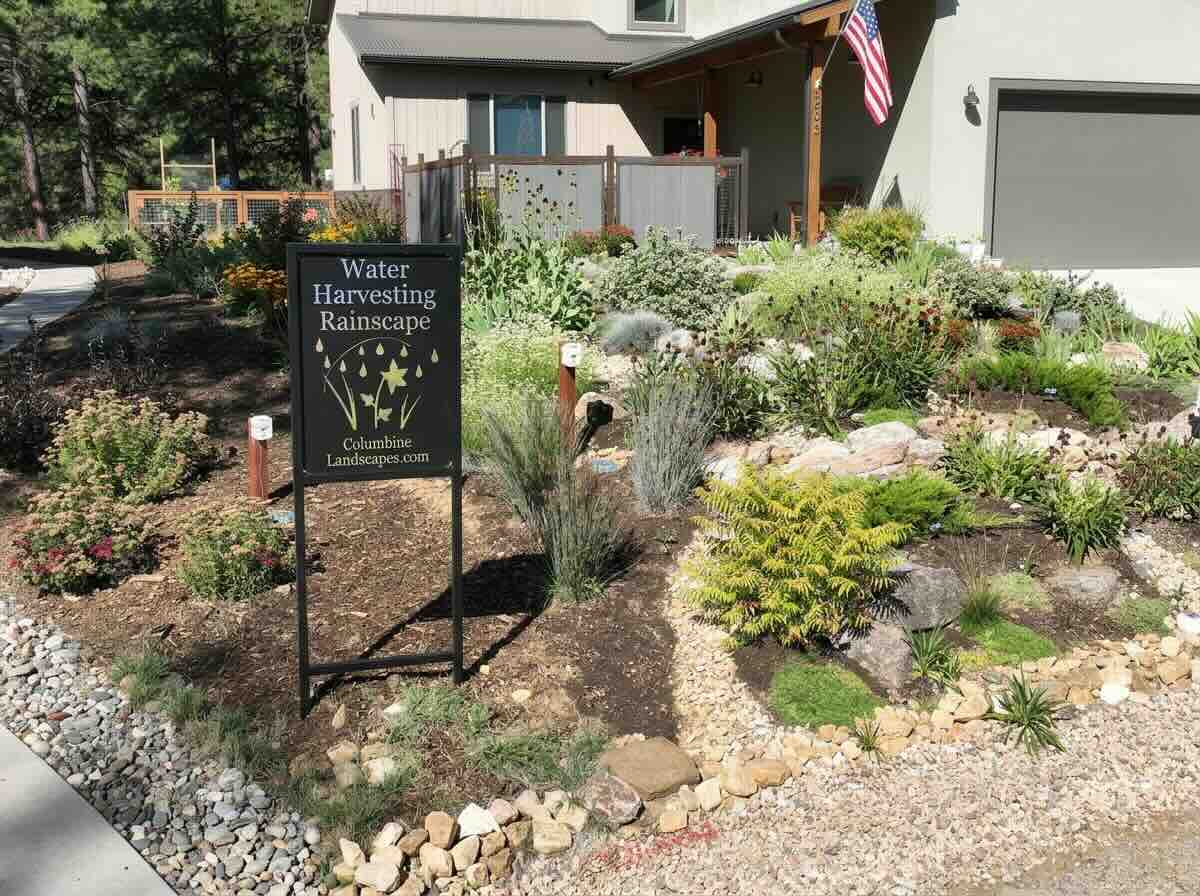
Edgemont Meadows
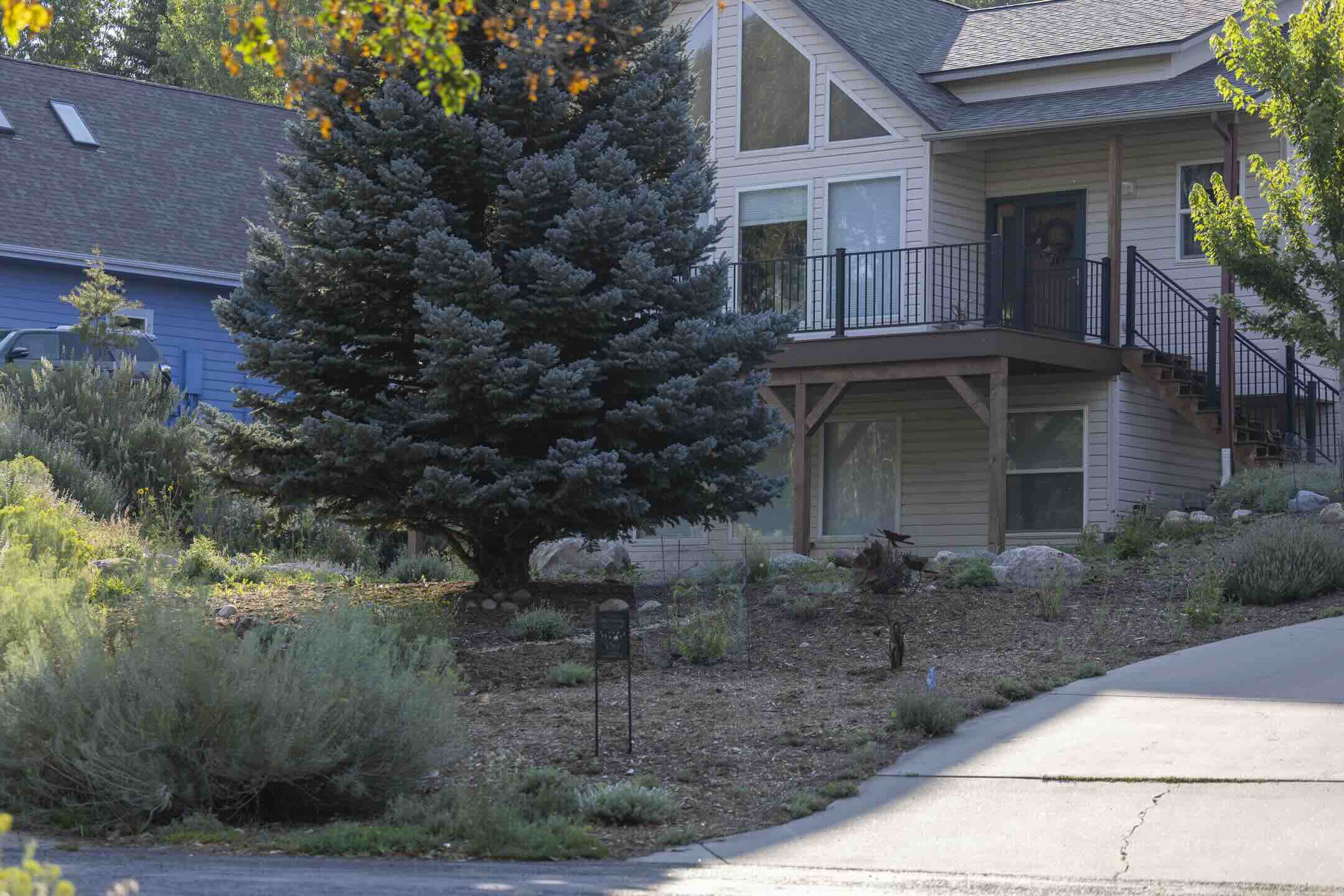
Hillcrest
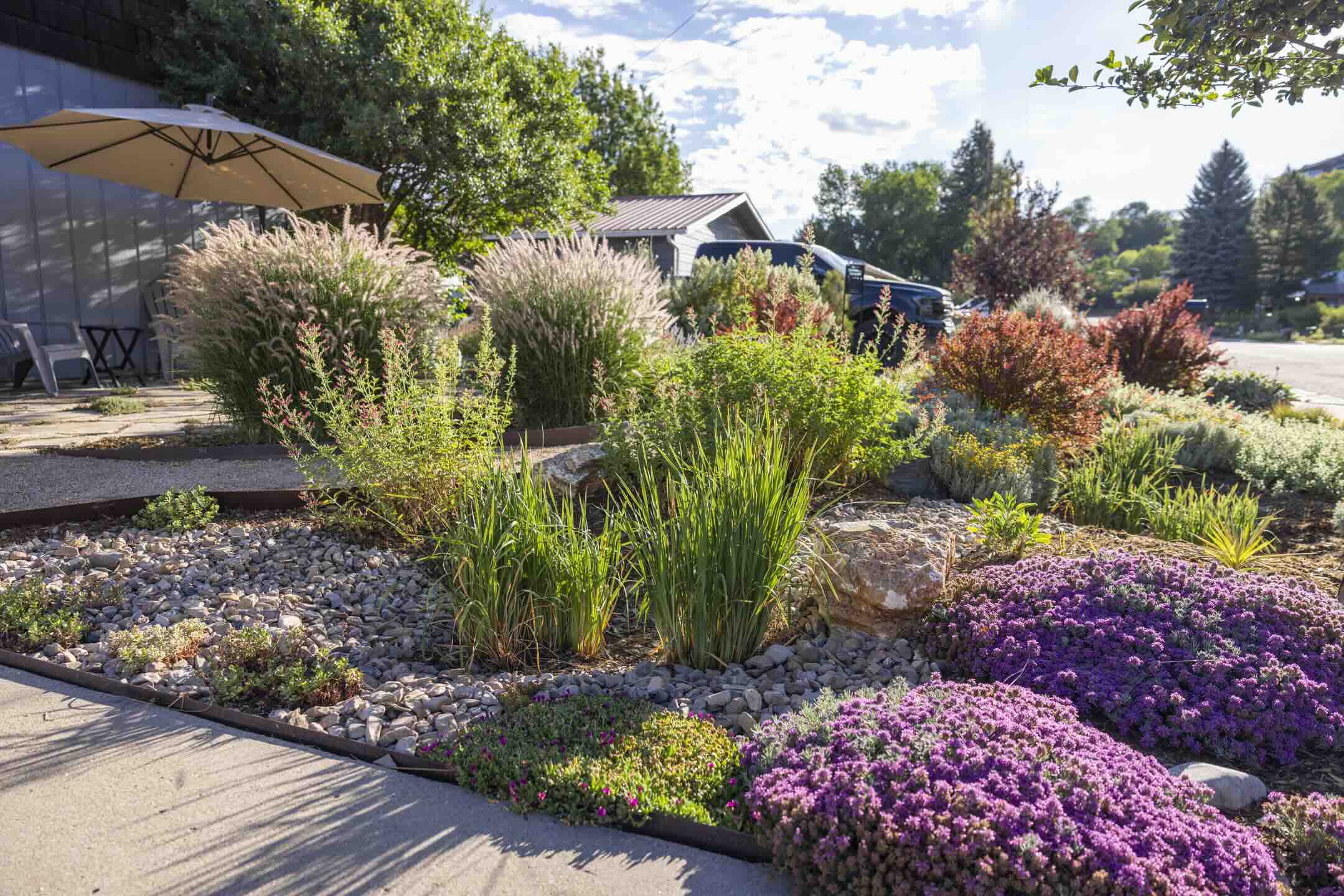
Florida Road / Oak Drive
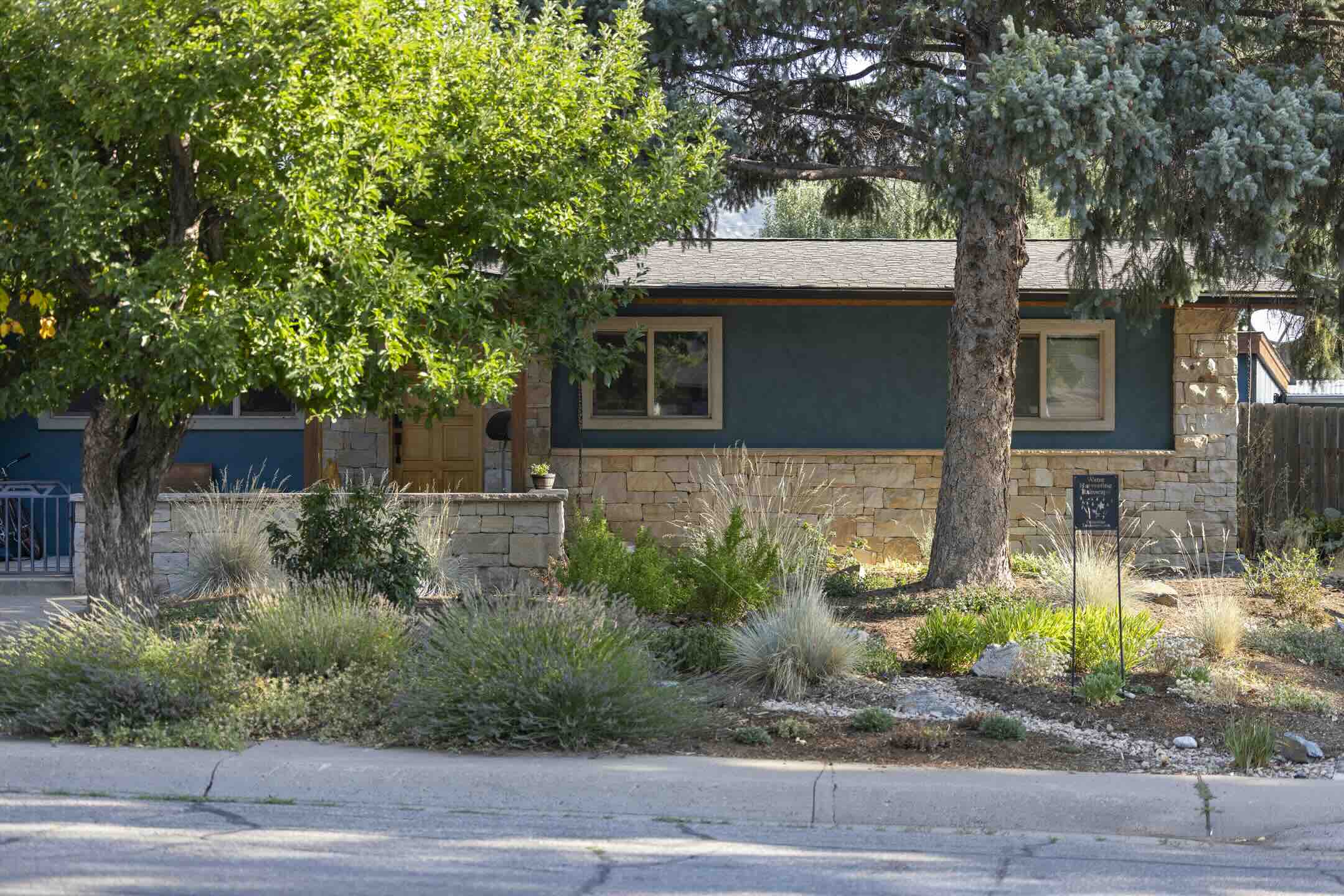
Riverview
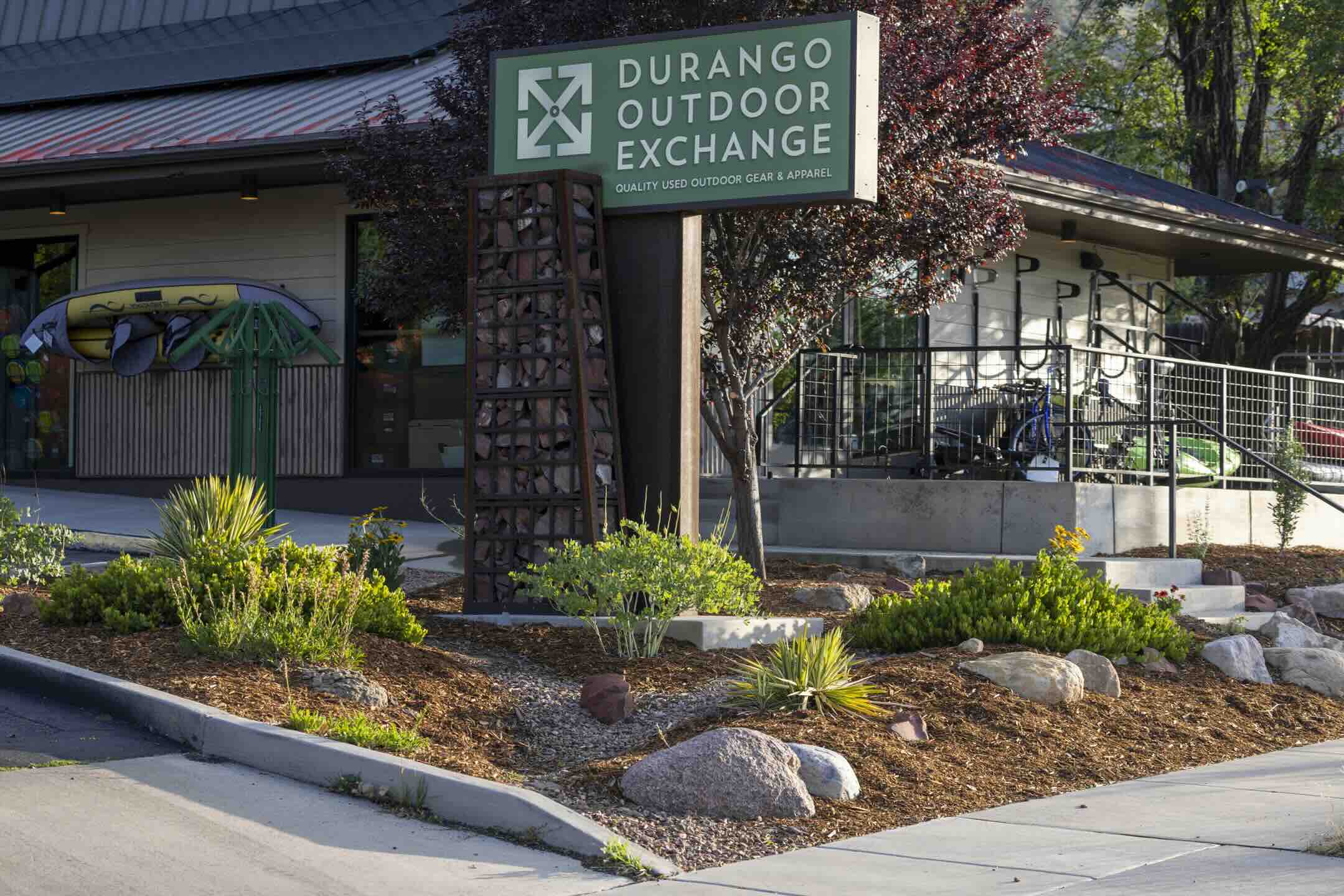
North Main / Durango Outdoor Exchange
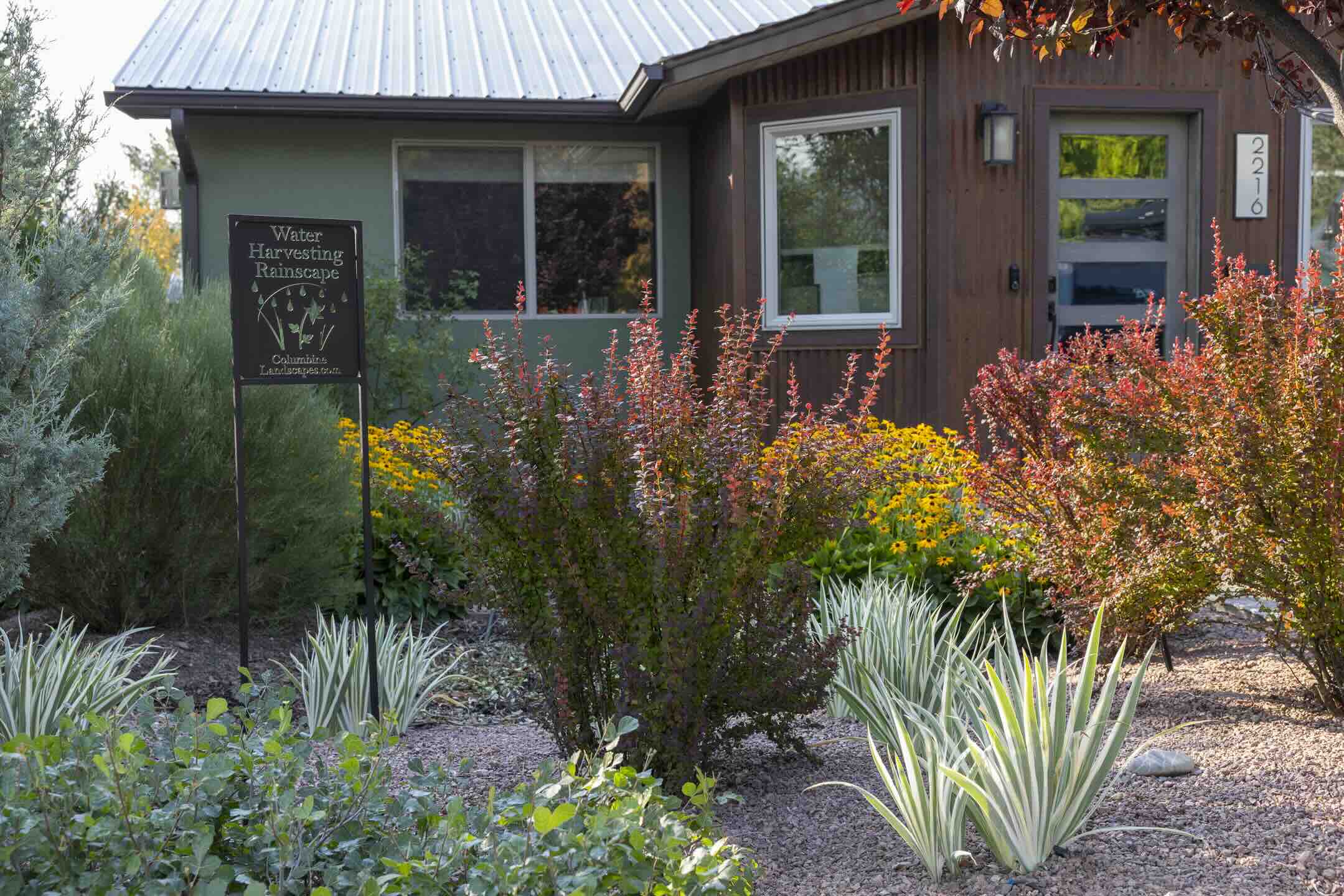
Crestview
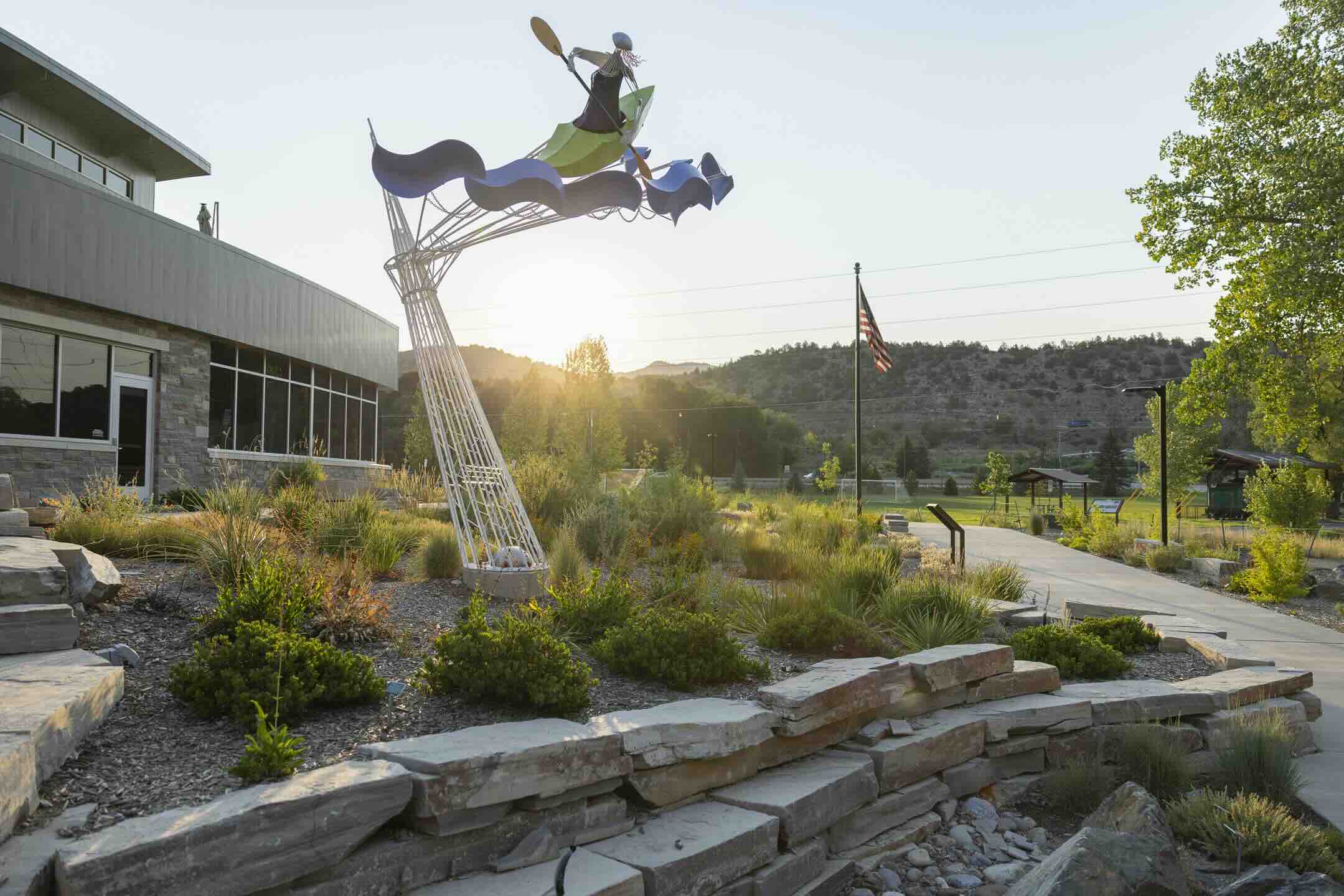
Santa Rita Water Reclamation Facility
3 Springs
Please respect owners' property and privacy — view from the street unless otherwise stated, take nothing (including photos of the home itself), leave nothing behind.

This tour was made possible through financial support from a City of Durango Impact and Resiliency Grant.
Edgemont Highlands
Designer Notes
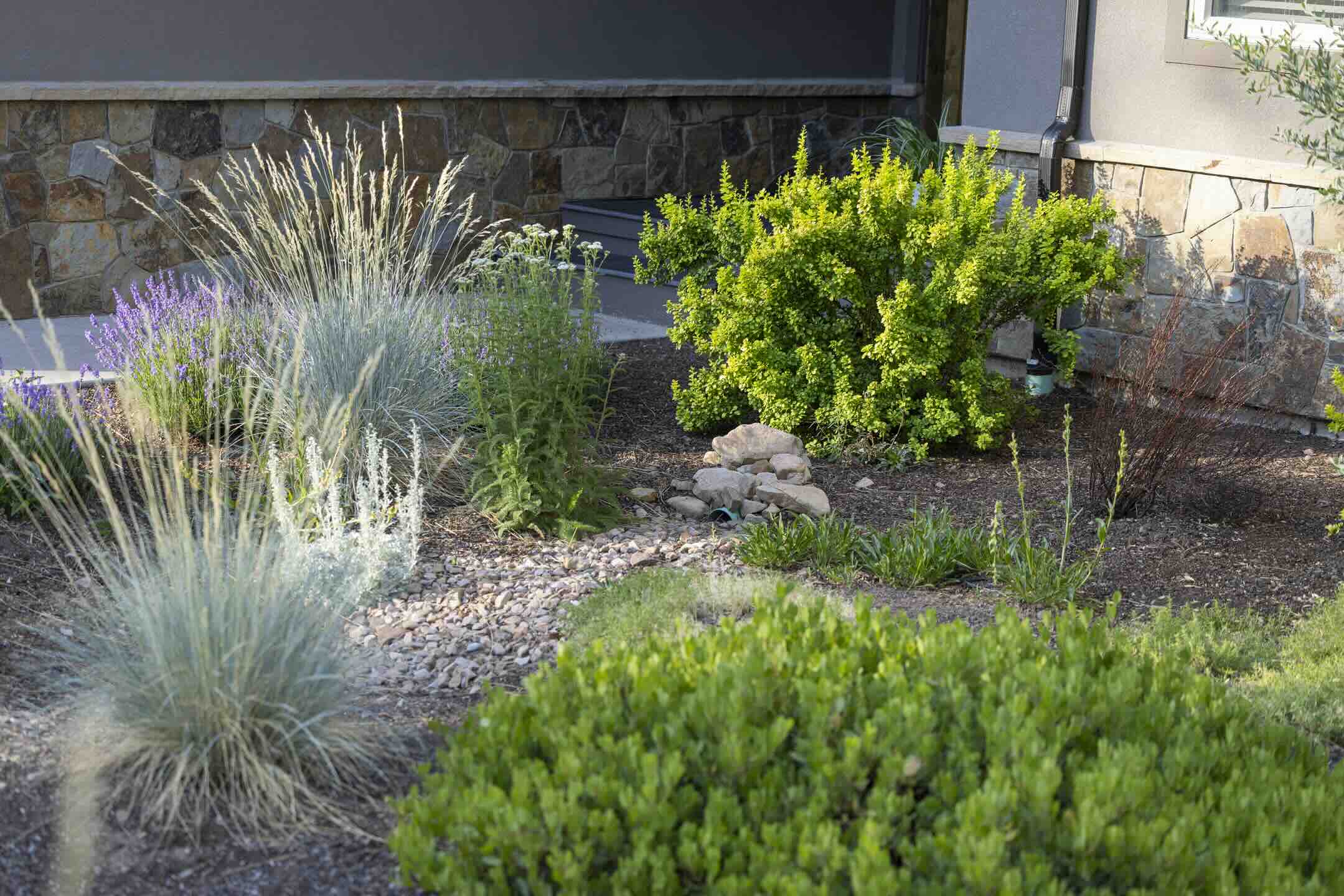
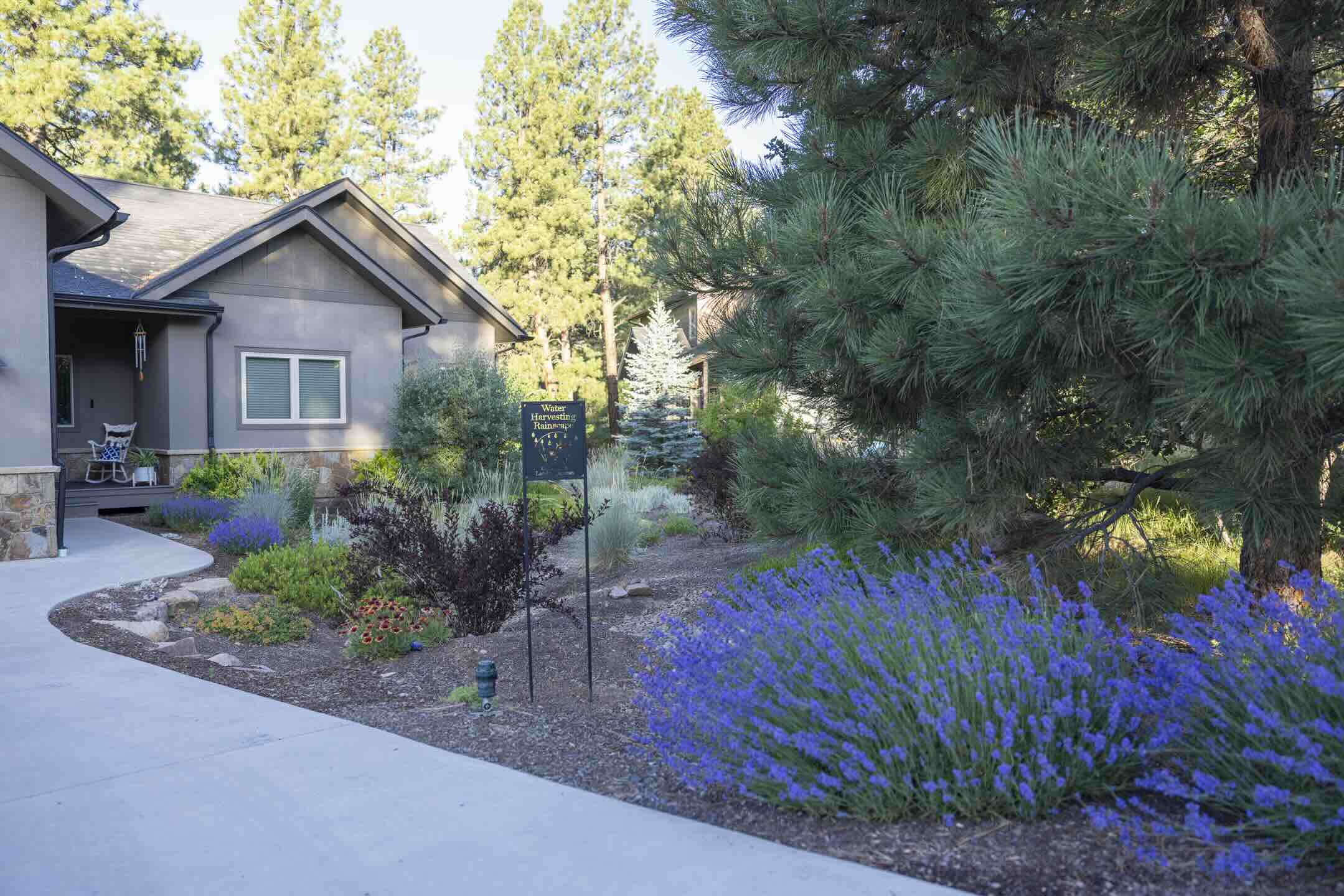
I find the whole feel of this rainscape to be a textural experience with the variety of evergreens, from the softness of the conifers (spruces and pines) to the bold broad-leaved manzanitas covering the ground, to the blue oat grasses that wave in the wind and remain through the cold, often still, winter months.
Plant Notes
My preference for locating lavender in any landscape, is for it to be near a path where it will be brushed against, since at least half the reason for planting it is it's delightful aroma, and the lavenders in this rainscape are rocking their duty along the edges.
The purple ninebarks really pop among all the green and do their intended job to draw the eye through the landscape.
The other plant to note here, is the variegated iris. I love how ornamental the leaves are throughout the season.
"I love how ornamental the variegated iris leaves are throughout the season. In my opinion, good design is like that; the foliage carries the show and the flowers are simply bonus, the icing on a cake that is just as good without it."
Foundation & Hardscape Notes
This site had a gently undulating topography that was fun to work with. Unlike most lots, it slopes toward the house, so drainage was a serious force we needed to massage. Water coming off the roof, driveway, and road are all designed to benefit the landscape.
Fortunate for the residents, the natural vegetation provides a screen from the road; as a result the tour participants will need to utilize the driveway to view this rainscape.
Homeowner Story
Homeowner story coming shortly.
Walking access on the driveway — this is one of the few stops where the owner has invited guests onto the property itself. Please just keep to the driveway and respect the space.
Edgemont Meadows
Designer Notes
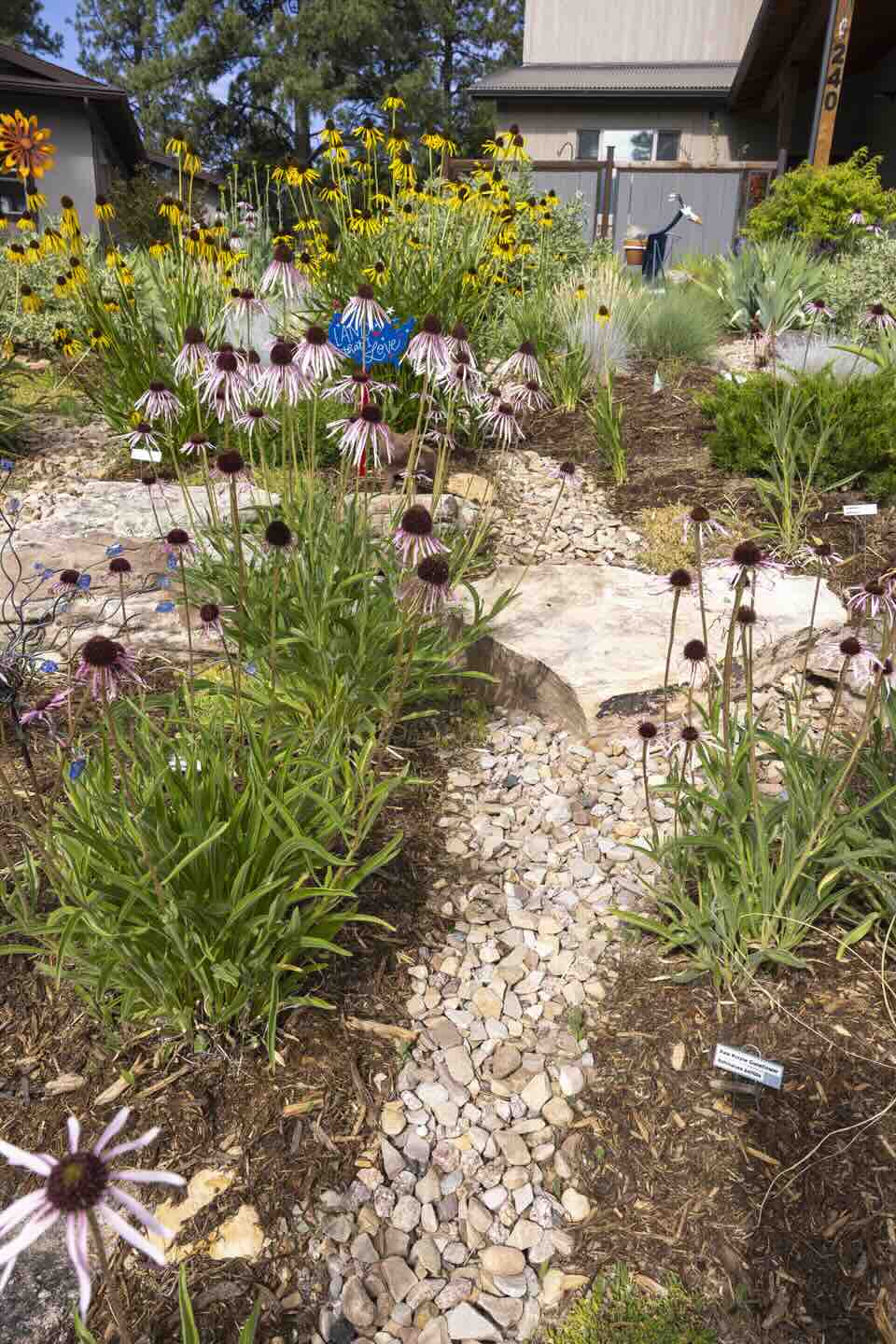
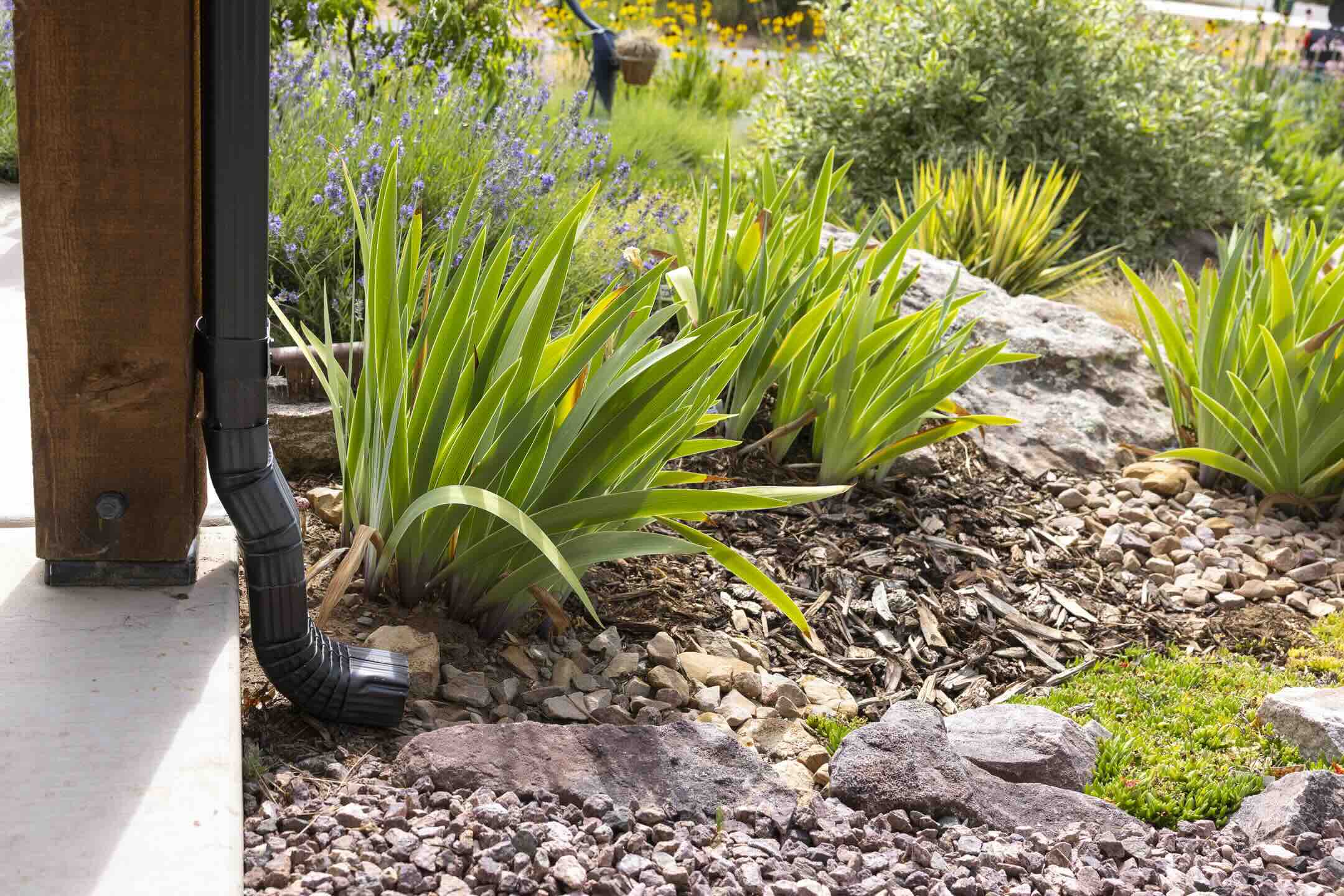
This Edgemont site offered a good slope for capturing water coming off the house and planting it into the landscape — before it ever reached the road or the drainage ditch. The resident, a passionate plant person, helped guide the vision, and has taken loving care of it ever since, helping it grow into the example it is today. The intent was a low, meadow-like feel, with spent flower seed heads left standing through winter for texture, food, and habitat.
Plant Notes
The Tiger Eye sumac was meant as a taller focal point — a bit of an experiment. The species is known to sucker and draw deer, and while this cultivar claims to breed out that tendency, it still suckers here and the deer still browse it, if a bit less. It hasn't reached the height once envisioned, but it remains an eye-catching accent in the landscape.
"There's a horizontal boulder visible from the street that looks fantastically natural as rain cascades over it during a storm. Highly recommend visiting this landscape during one."
Foundation & Hardscape Notes
The boulders were placed with a careful eye toward how water would move over them in a rainstorm — and it has worked beautifully. Watching a storm move through this landscape shows the design at its most alive.
Homeowner Story
It is so gratifying to run outside in a rainstorm and watch the basins fill with water, knowing they will slowly seep and release the water into the landscape. We have no doubt that without the rain gardens, our sloped yard would only have eroded and washed away every time there was a storm. Taking soil and plantings with it. So rain gardens save us money, too.
Folks are welcome to wander at their leisure. Please wander up to the top and see how water from the downspout starts the harvesting journey down the slope. And, on your tour, enjoy following the paths leading from one rain garden to the next.The owner welcomes visitors to walk through this rainscape, if they'd like a closer look.
Walking access welcomed here — this is one of the few stops where the owner has invited guests onto the property itself. Please still keep to the planted paths and respect the space.
Hillcrest
Designer Notes
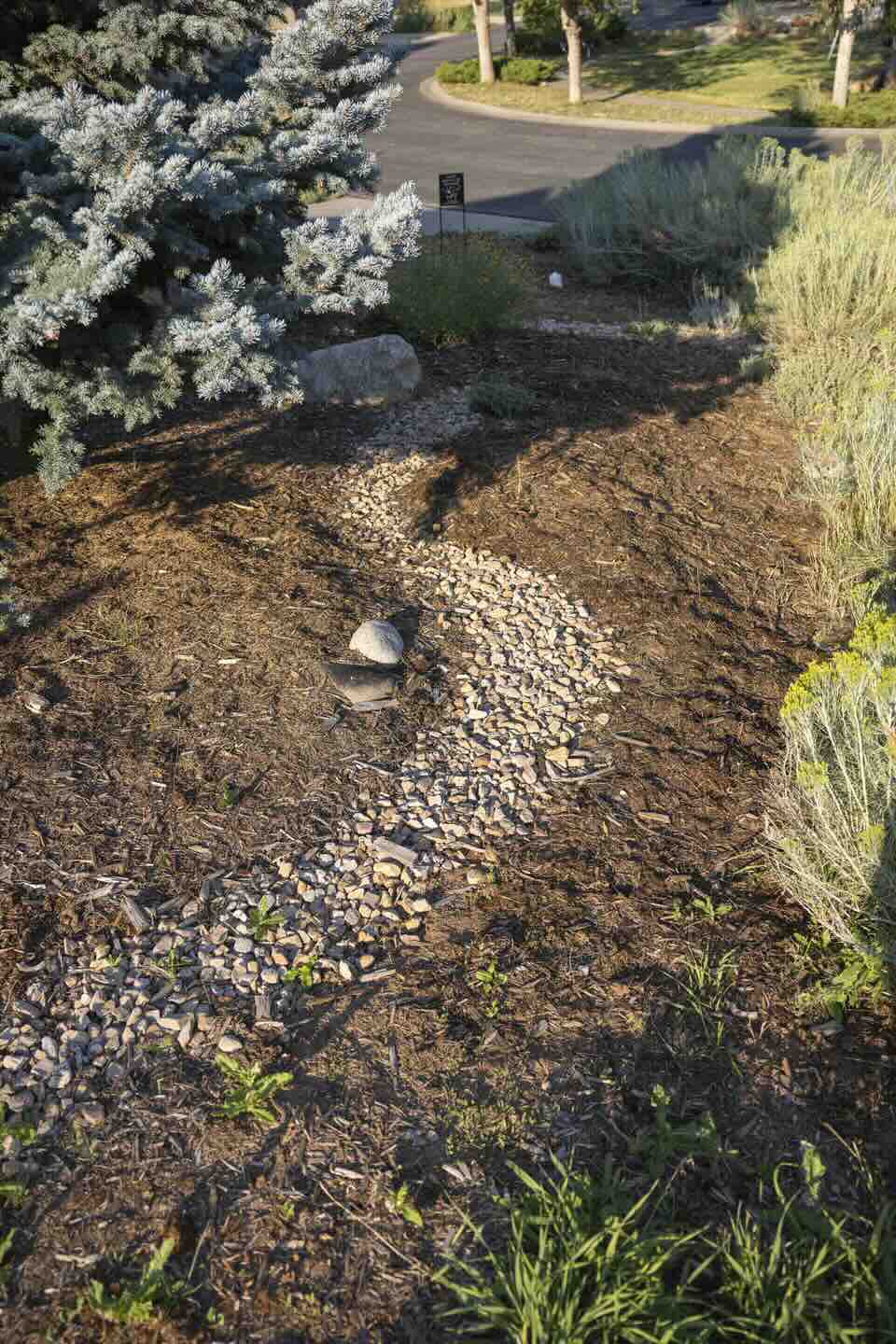
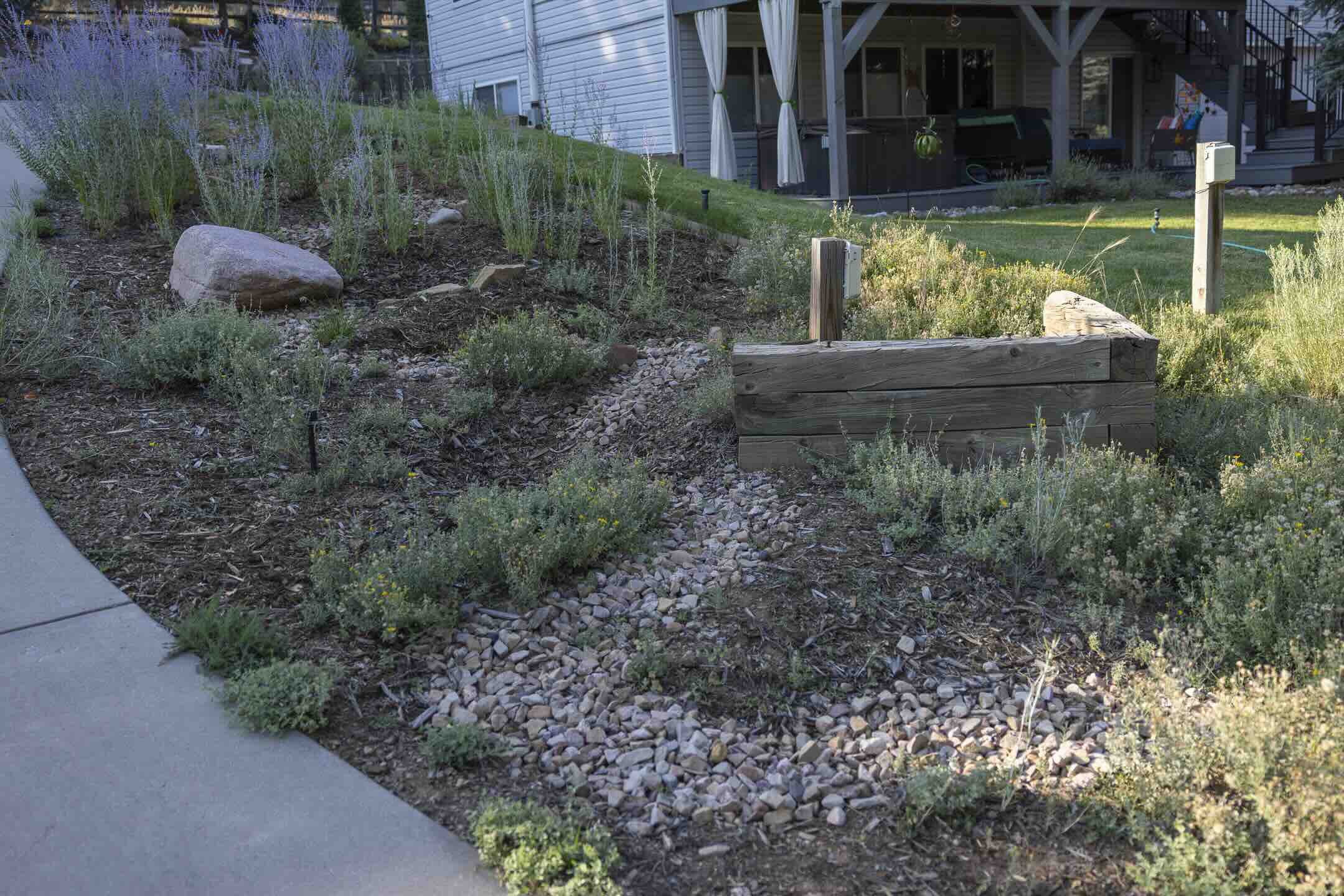
We love a project that prioritizes lawn reduction! We were able to reduce most of the lawn on this property and replace it with xeric plants and an earthworks system- both wonderful paths to creating a more biodiverse and sustainable landscape.
Plant Notes
In place of a lawn, a variety of shrubs, trees and perennials were added. We opted for a plant palette that added color and interesting texture, while also being low maintenance. Some highlights are the Hummingbird Trumpet along the earthworks system, as well as the rich, purple Ninebarks that add contrast and volume to the landscape.
"We love a project that prioritizes lawn reduction!"
Foundation & Hardscape Notes
The hillside in the front yard made for a perfect rain harvesting site. There is an earthworks system on each side of the driveway that is not only visually appealing, but vital to keep rainfall on the property and utilize every drop. We incorporated low maintenance, xeric plants along each earthworks system.
Homeowner Story
Story coming soon.
Florida Road / Oak Drive
Designer Notes
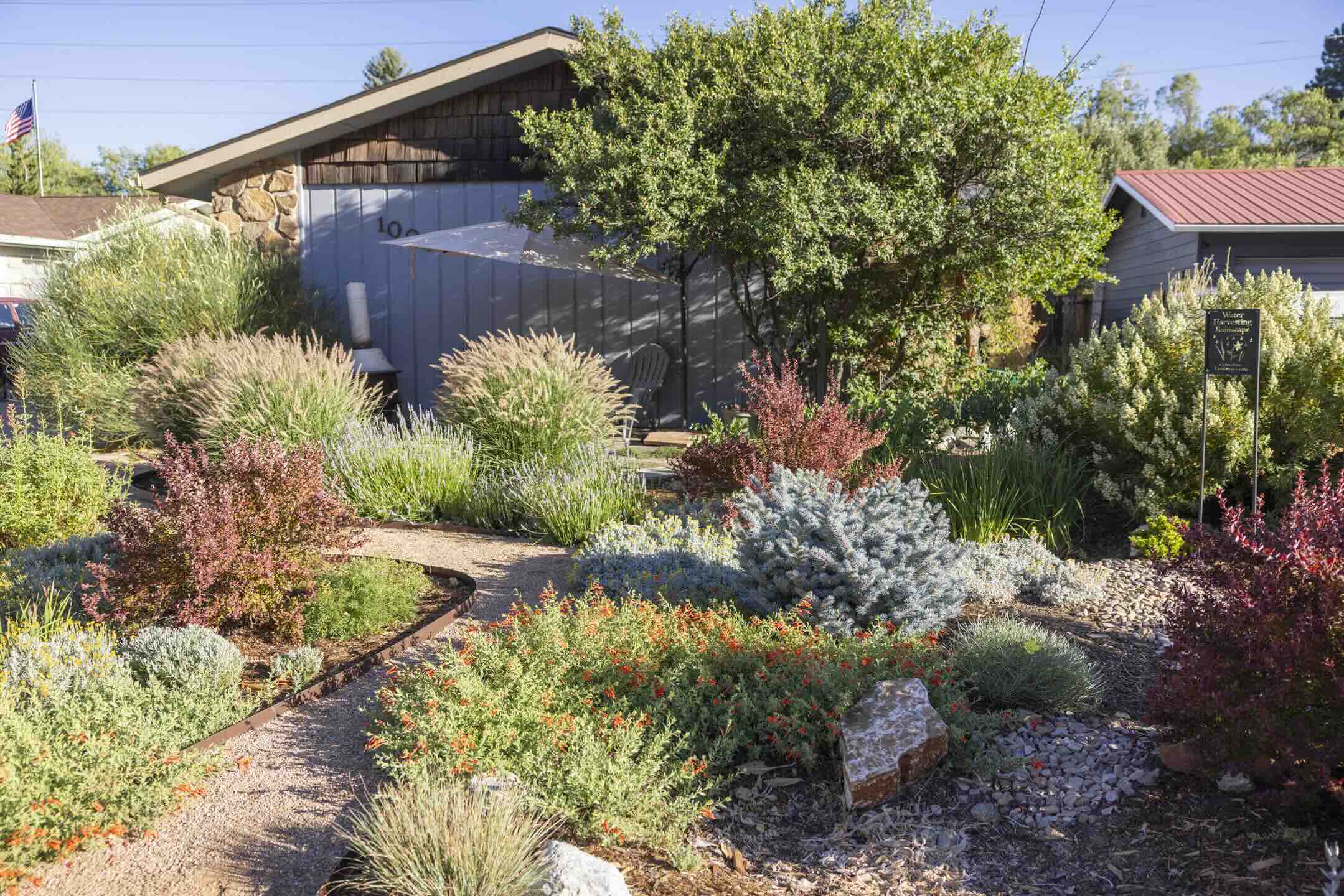
This resident opted for design-by-consulting rather than a drawing. Ideas were shot back and forth, integrating her desires with the designer's vision, before a trip to the nursery together to pick out plants. Back home, the plants were laid out, moved, and talked over until the layout felt right — a collaborative process both found genuinely fun.
She has taken immaculate care of the rainscape since, and holds the distinction of conquering bindweed entirely by hand-pulling it until she'd won the battle.
Plant Notes
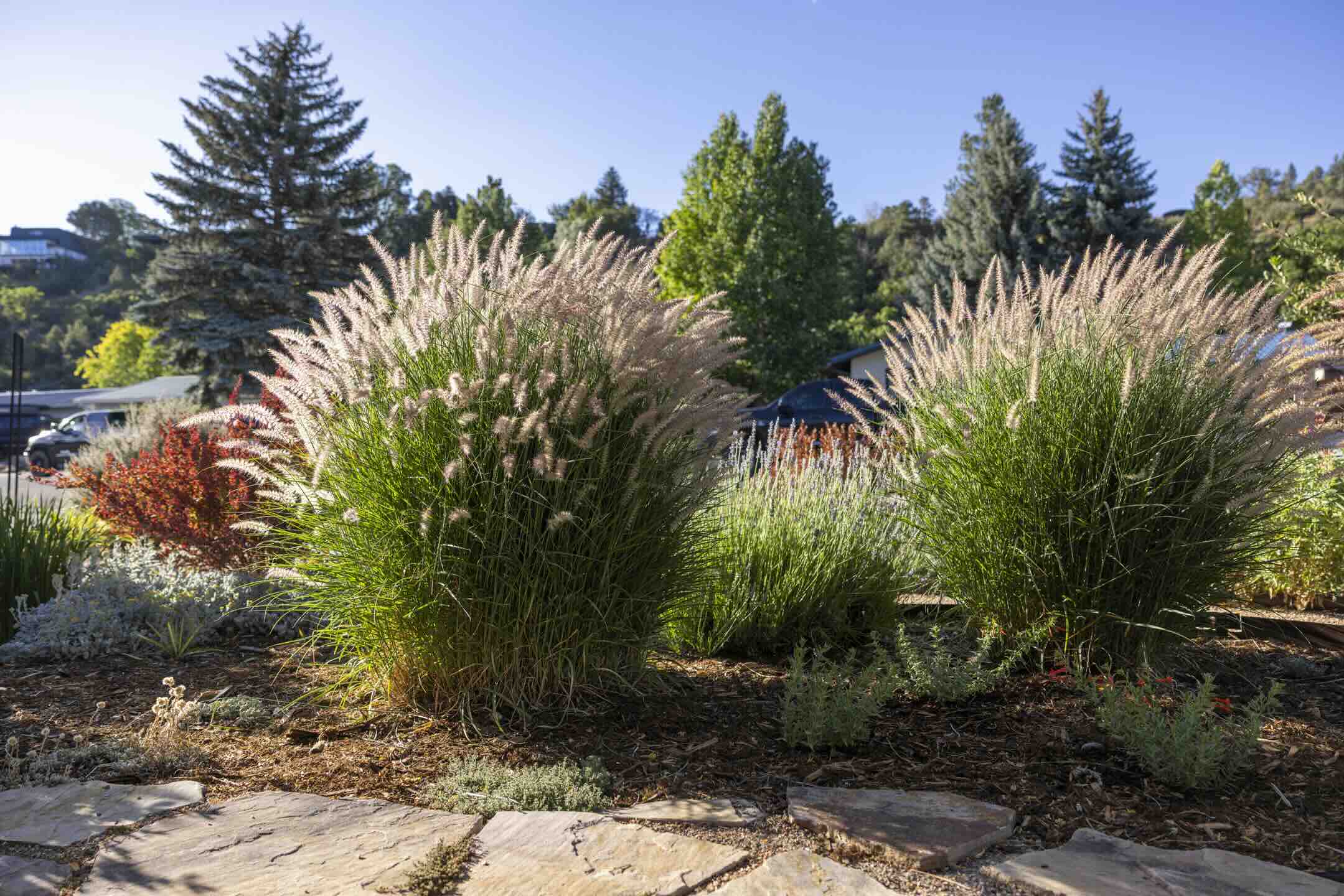
It's been fun to watch the foliage contrasts in this landscape. Texture, form, and structure do the heavy lifting toward a garden that "pays rent" year round — a new seedhead each season, shifting combinations, and real interest even in winter.
A standout is the Pasque flower (Pulsatilla nuttalliana, a Colorado native) — an early bloomer whose poofy seedheads persist long into the season on slender stems. Siberian irises fill the basins, tolerating both wet and dry conditions well. The most visually dominant plant, thanks to its size and fragrant blooms, is Spanish broom (Spartium junceum) — mislabeled at purchase as the hardier Spanish Gold Broom (Cytisus purgans). Spanish broom is only rated to zone 7, while Durango sits in zone 5; it's thriving here likely thanks to the warmth held by the nearby driveway and wall.
Foundation & Hardscape Notes
The resident built the patio themselves, providing afternoon shade and a quiet the backyard doesn't offer, backing as it does onto Florida Road. A winding path was a specific request, and gives the design a structure that ties the whole space together.
Homeowner Story
Story coming soon.
Riverview
Designer Notes
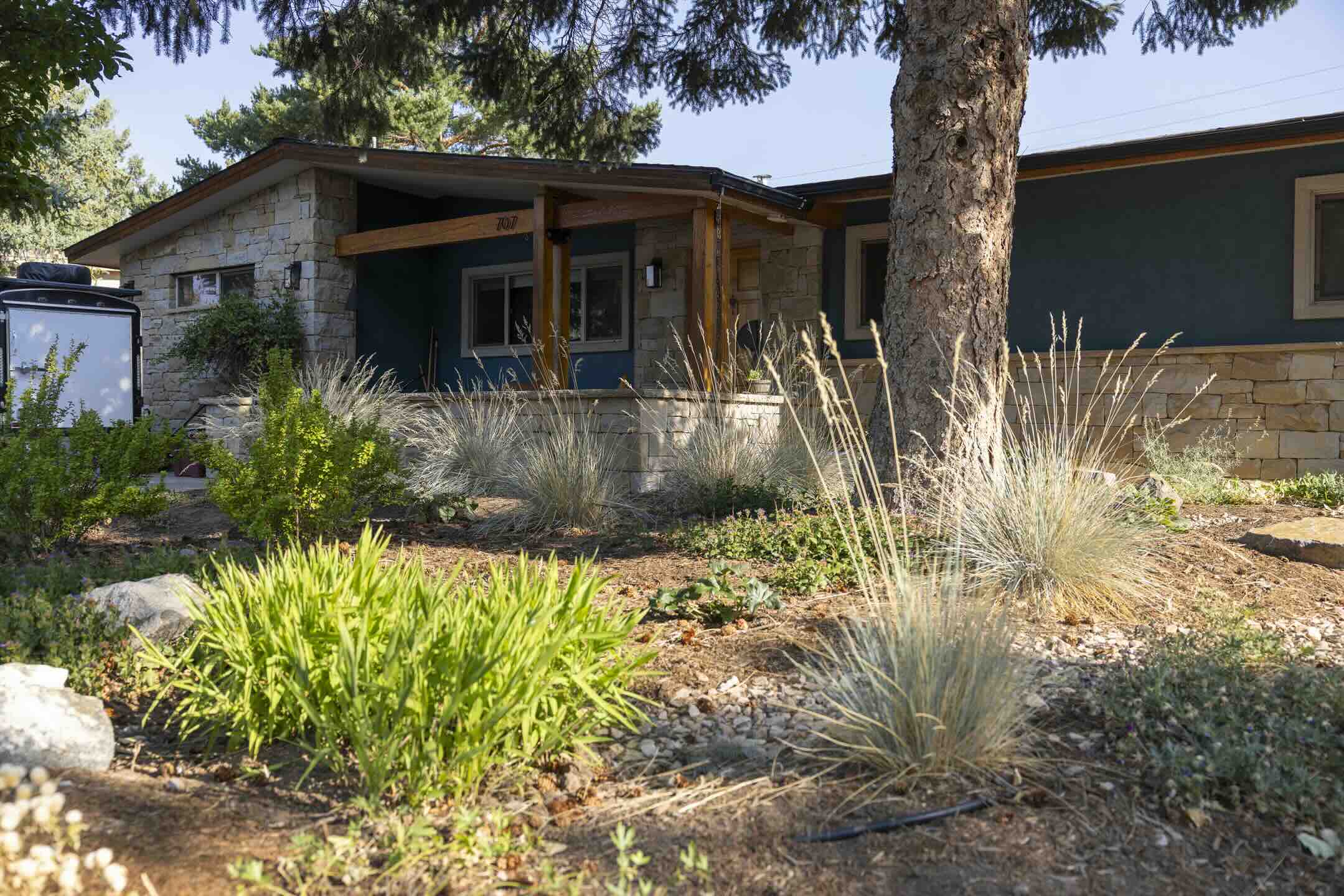
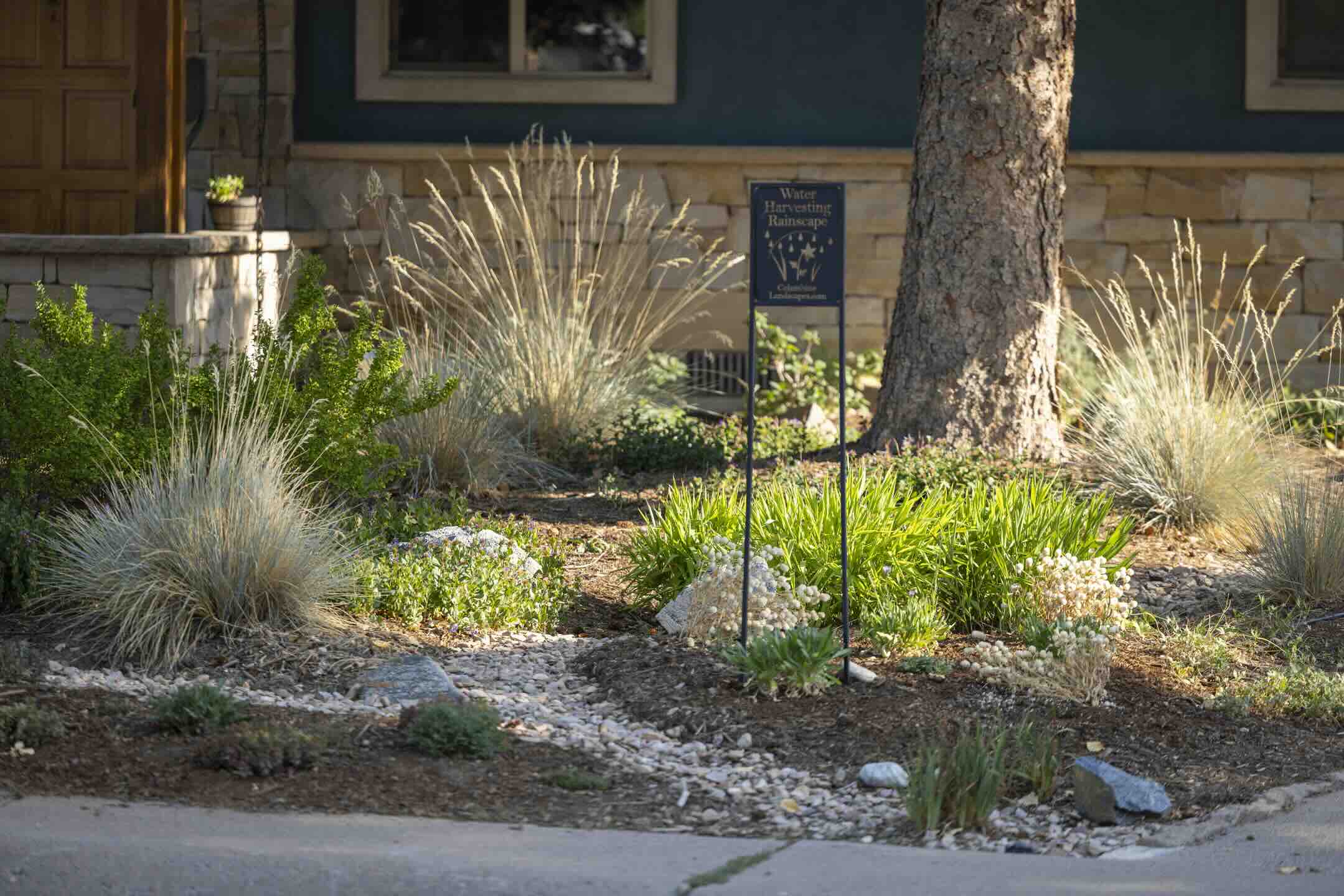
A shady site, and a welcome chance to work with a different palette. Shade changes everything about a rainscape — more of the plants suited to it turned out to be happy alternating between the wet and dry extremes a rain basin swings through, so the basins here lean into that less common mix.
Plant Notes
Worth seeking out in one of the basins: Northern Sea Oats (Chasmanthium latifolium), a plant equally at ease standing in water or riding out a xeric drought. It's not common in this area, which makes it one of this stop's quiet highlights.
Foundation & Hardscape Notes
No hardscaping was strictly required on this property, but gravel spillways were dug and gravel spread by hand to guide water into the rain basins. Simple, physical work — and it's these spillways that make sure every drop of rain ends up exactly where it's needed.
Homeowner Story
Living with a shade garden instead of a grass front lawn is like having nature at our doorstep. The garden changes with the seasons, fresh greens and delicate blooms in spring, lush layers of foliage in summer, rich colors and seed heads in fall, and beautiful textures and evergreens through winter. Caring for it becomes a welcome pause in the day, pulling a few weeds, clearing leaves, or tending to a plant offers a chance to slow down, work with your hands, and notice what is changing. Instead of feeling like another chore, the maintenance becomes a quiet, satisfying ritual that keeps me connected to the garden and the seasons.
North Main / Durango Outdoor Exchange
Designer Notes
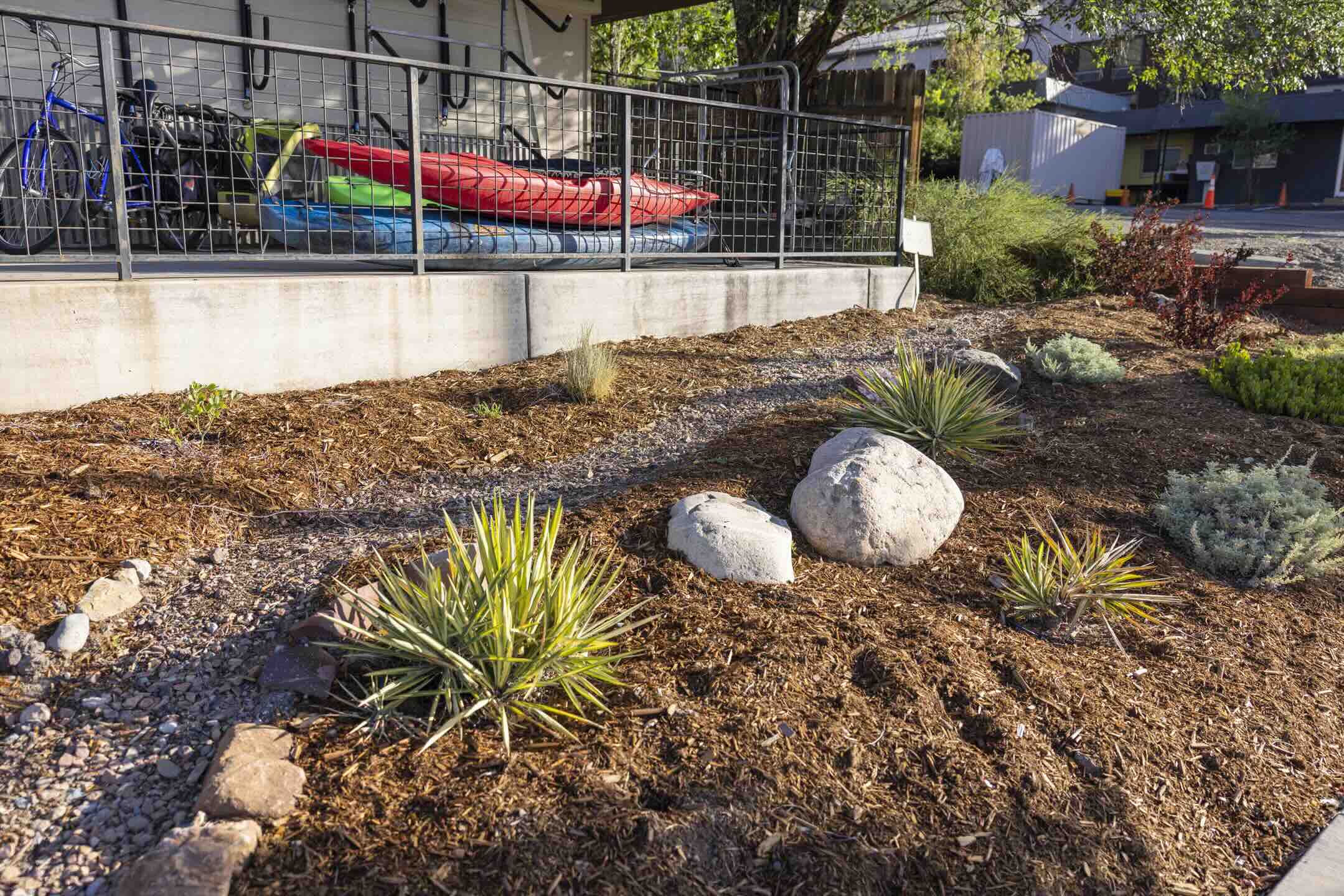
This rainscape gets to work with an unusually good asset: the building's signature roof, a holdover from its days as a Pizza Hut. Its gutters have holes instead of downspouts, and water is harvested off both the south and north sides.
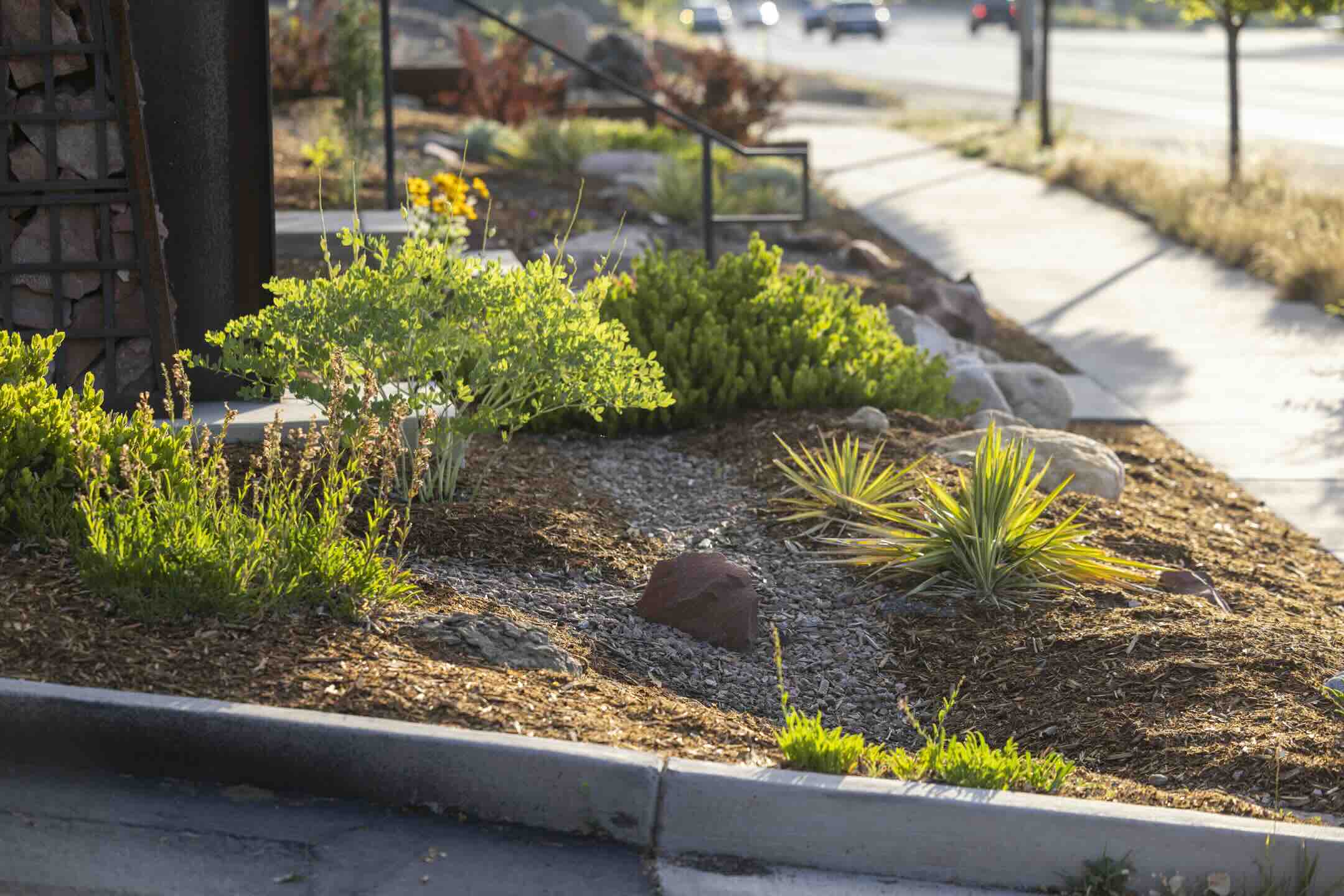
The earthworks — basins and spillways — are left visible here rather than tucked away, so visitors can see exactly how water is slowed and spread across the landscape by working with the site's slope. Columbine Landscapes has partnered with Durango Outdoor Exchange long-term, two organizations aligned on the same goal: a better relationship between people and the planet. With this central a location, the site has helped raise public awareness of rainscapes, and was featured in the Durango Herald in 2019.
Plant Notes
Look for the pink-blooming San Francisco Scotch Broom (Cytisus scoparius 'San Francisco') tucked under neighboring foliage on the north edge, a gorgeous spring bloomer. Three were originally planted; the two nearer the sidewalk didn't survive, and more couldn't be sourced to replace them.
Foundation & Hardscape Notes
Look closely at the sidewalk at the front corner of the building, behind the sign — the staining traces exactly where the downspoutless gutter empties, sloping perfectly into a graveled spillway that ushers rain straight into the landscape. A good reminder that every site is unique, and can be worked with to capture rain in its own way.
Business Owner Story
One of the things we appreciate most about our rainscape is that it makes the landscape feel both beautiful and purposeful. We love watching the rainwater move through the property and knowing that, instead of simply running off, it is being slowed down and put to use supporting the plants and soil. The mix of plants and natural features has made the space feel more alive and connected to our surroundings.
Because the rainscape sits at the entrance to our business, it also helps create an inviting first impression for our customers. It sets a tone before people even walk through the door—one that reflects our appreciation for the outdoors, thoughtful use of resources, and connection to the place where we live and work.
Crestview
Designer Notes
One goal here was practical: block headlights from cars driving south on Hermosa Dr, which used to shine straight into the home's windows at night. Three upright junipers now do that job.
These residents also embraced "chop and drop" in their rain basins — cutting garden debris into 3–4' segments and dropping it right where the moisture settles. The added organic matter closes the loop, keeping nutrients on site and feeding the soil, while also acting as a biosponge that seals in moisture and breaks down faster as a result.
Plant Notes
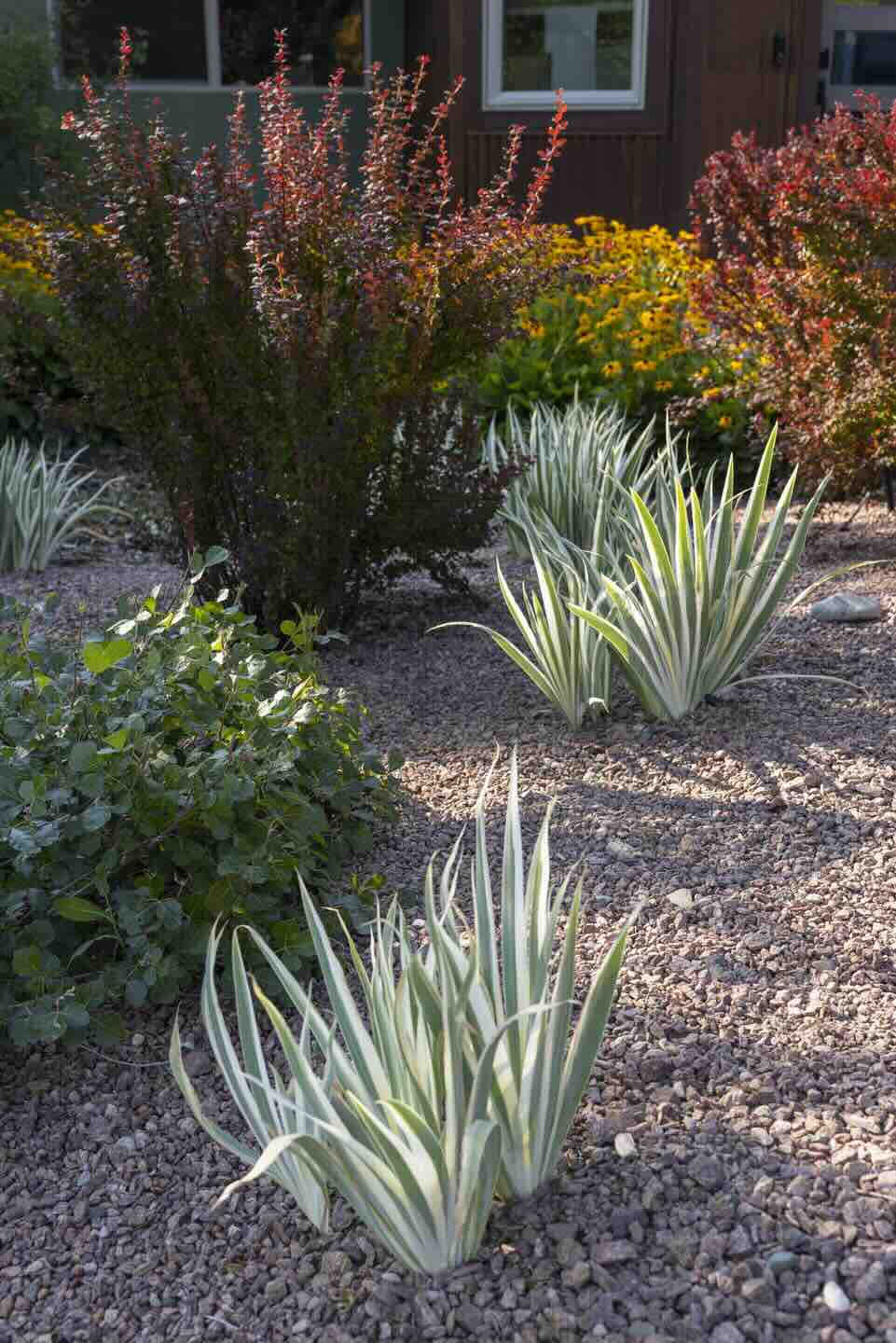
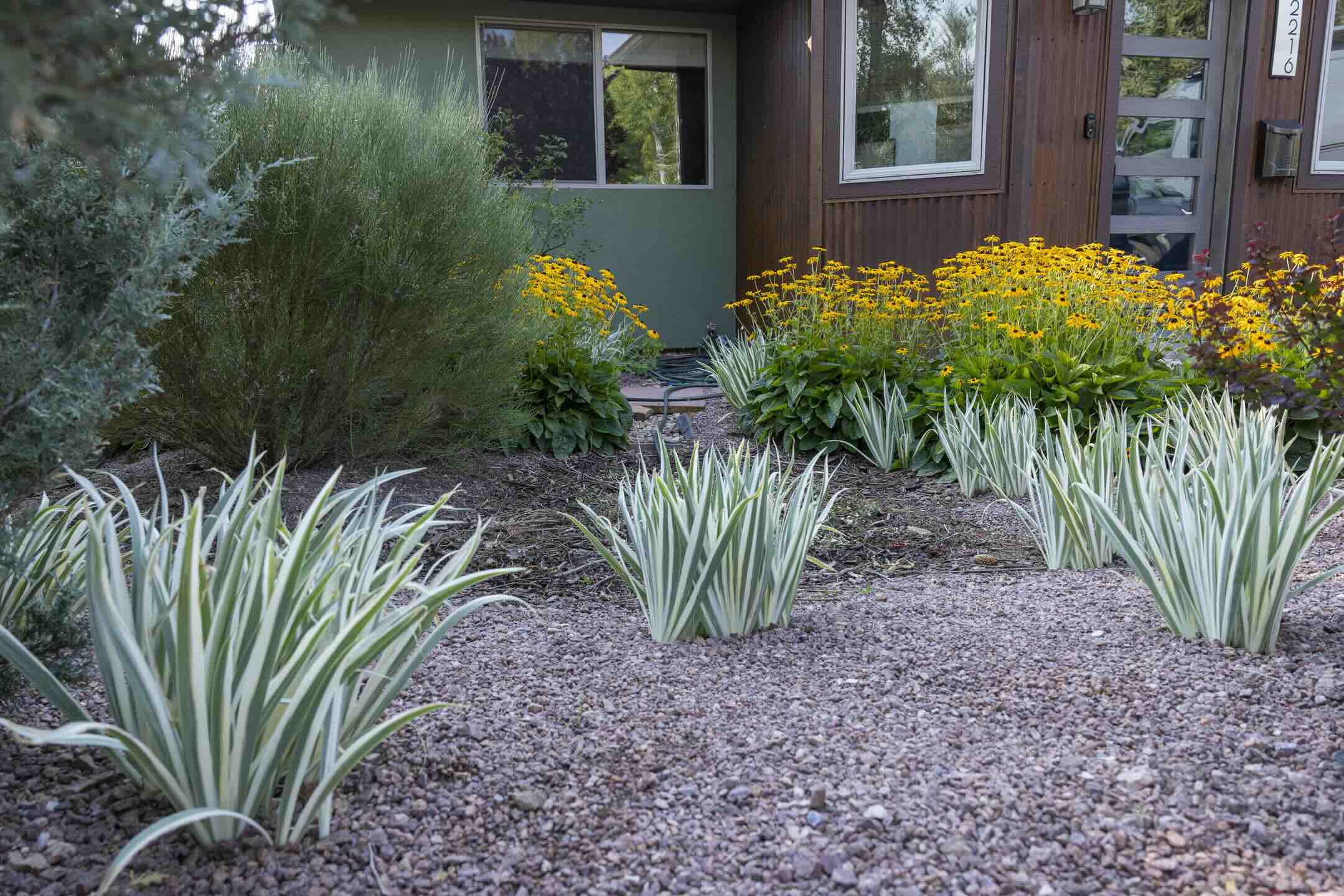
This site embodies the idea that a garden should pay rent year round. Several species are interplanted so something is always in bloom through the season — spring's oriental poppies handing off to fall's brown-eyed Susans is the clearest example. Beyond the visual payoff, the season-long blooms keep pollinators fed throughout. Fall color, structure, and evergreen elements carry the garden through winter, too.
Foundation & Hardscape Notes
The gravel mulch here skips the usual grey for a warmer tone that echoes the color of the local mountains and rock strata — grey can read cold and industrial, closer to a parking lot than a garden. All inorganic gravel mulch is firewise, and this angular style is the recommended choice: it packs down more comfortably underfoot than round gravel, and pieces 1.5" and smaller knit together to hold moisture in and weeds out. It stays tidy, and this size is easy to weed by hand when needed.
Homeowner Story
Story coming soon.
Santa Rita Water Reclamation Facility
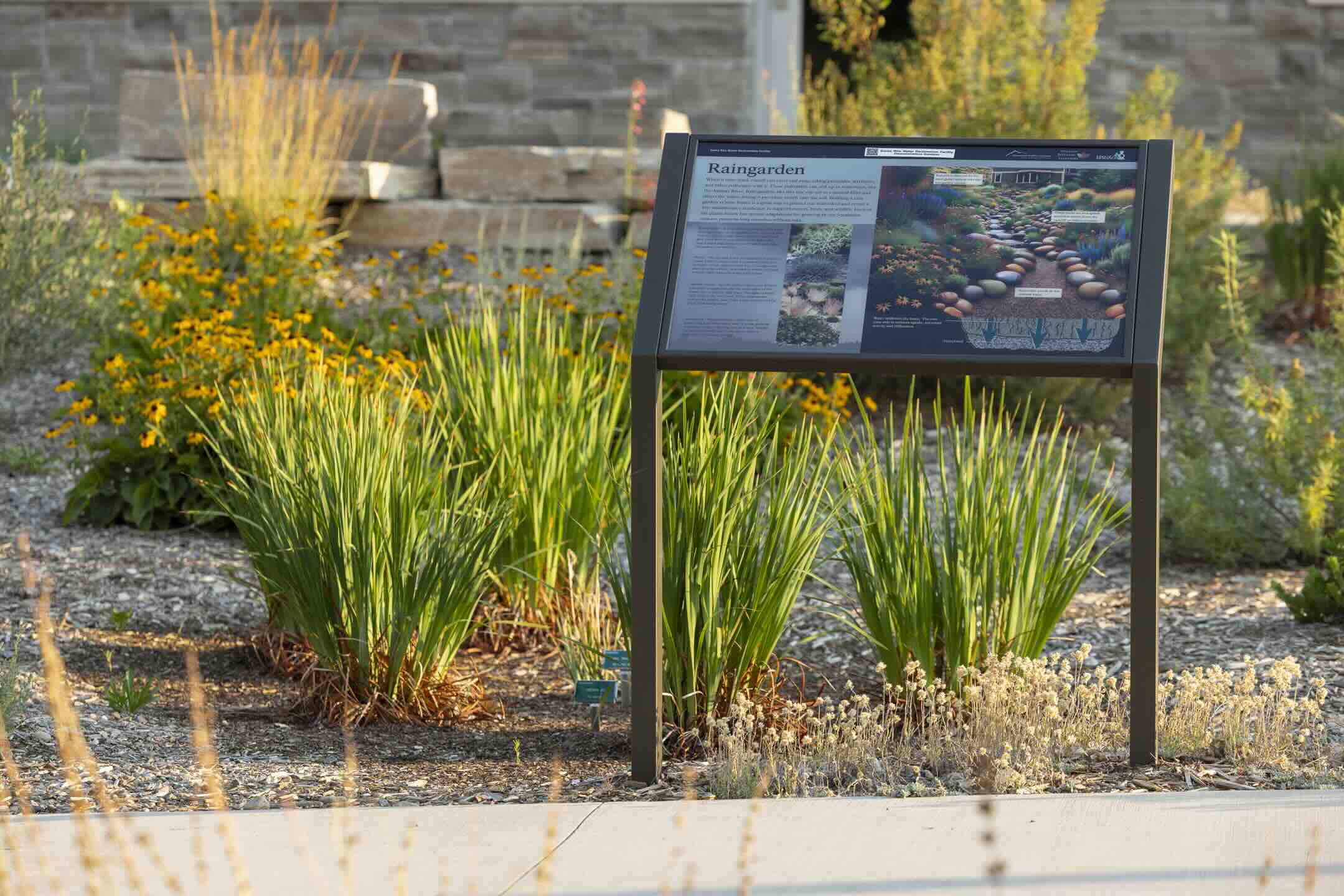
Designer Notes
This landscape was a vision by a City staff member who saw the new water reclamation building's landscape as a perfect opportunity to demonstrate what is possible in regards to making the best use of water in our landscapes. The administration building for the Santa Rita Water Reclamation Facility was new in 2020 when Eva and two other designers were engaged to design the landscape accordingly. The landscape was installed at the end of 2023. The landscape was installed at the end of 2023 as part of the Santa Rita Demonstration Gardens.
Plant Notes
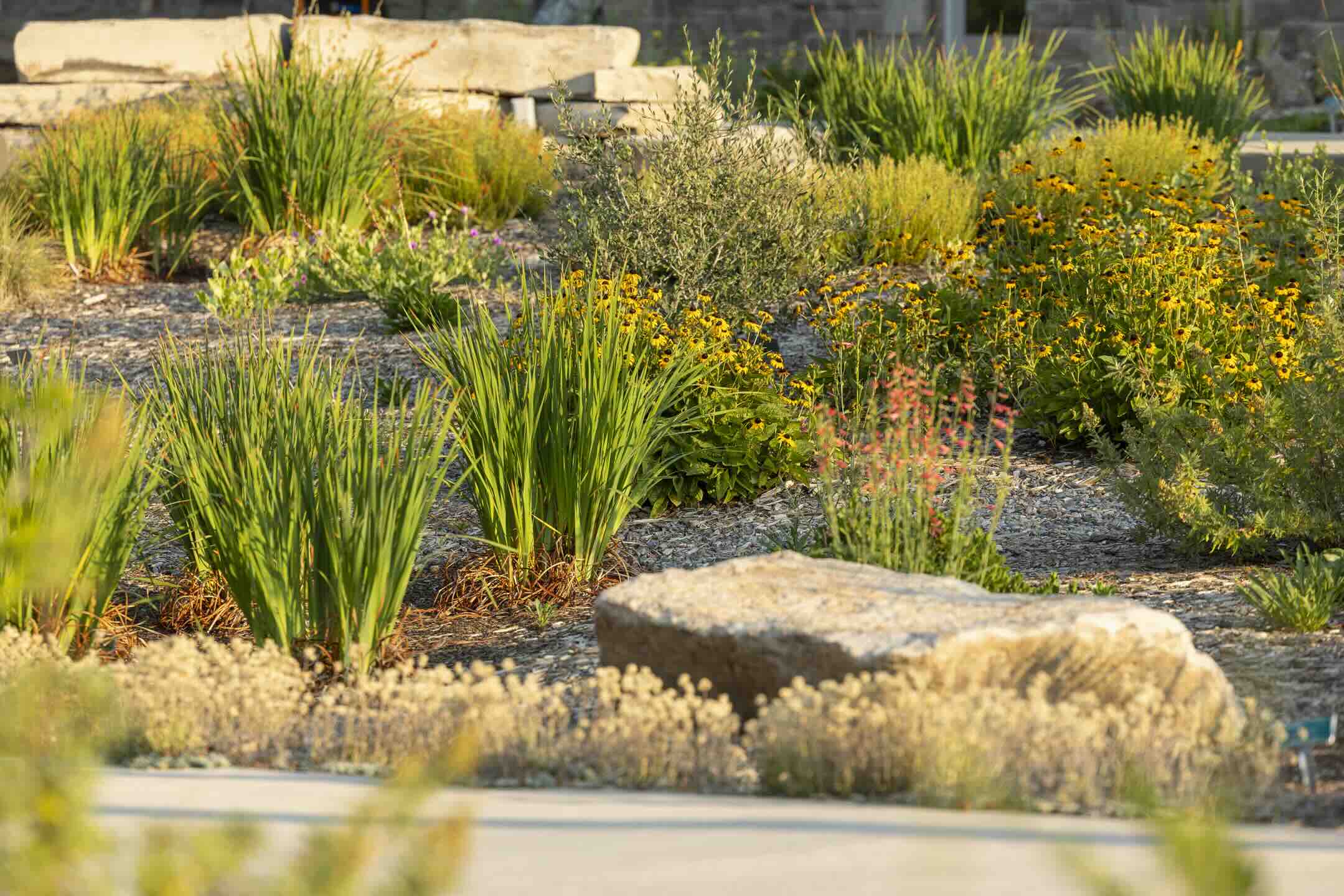
In addition to showing how a rainharvesting landscape works, this landscape's raison d'etre is to demonstrate the beauty of native plants that attract pollinators, creating habitat in our built environments.
Foundation & Hardscape Notes
Although the building's roof slopes away from the garden, and therefore does not contribute water to it, it is a good representation of how the land can be sculpted to make the most of any water that lands directly on it. Without rain basins, water (rain or irrigation) mostly moves along the surface and down and off the slope. Basins sink, slow, and spread that water so that the land can take a deep life-giving drink and benefit from it for much longer.
Client Story
While I love everything to do with the Rainscape at Santa Rita Water Reclamation Facility Demonstration Gardens, I am in awe of how effectively it filters and absorbs the water. It works so well that even in the heaviest rains it never overflows a drop of water or mulch onto the sidewalk. It is remarkable!
3 Springs

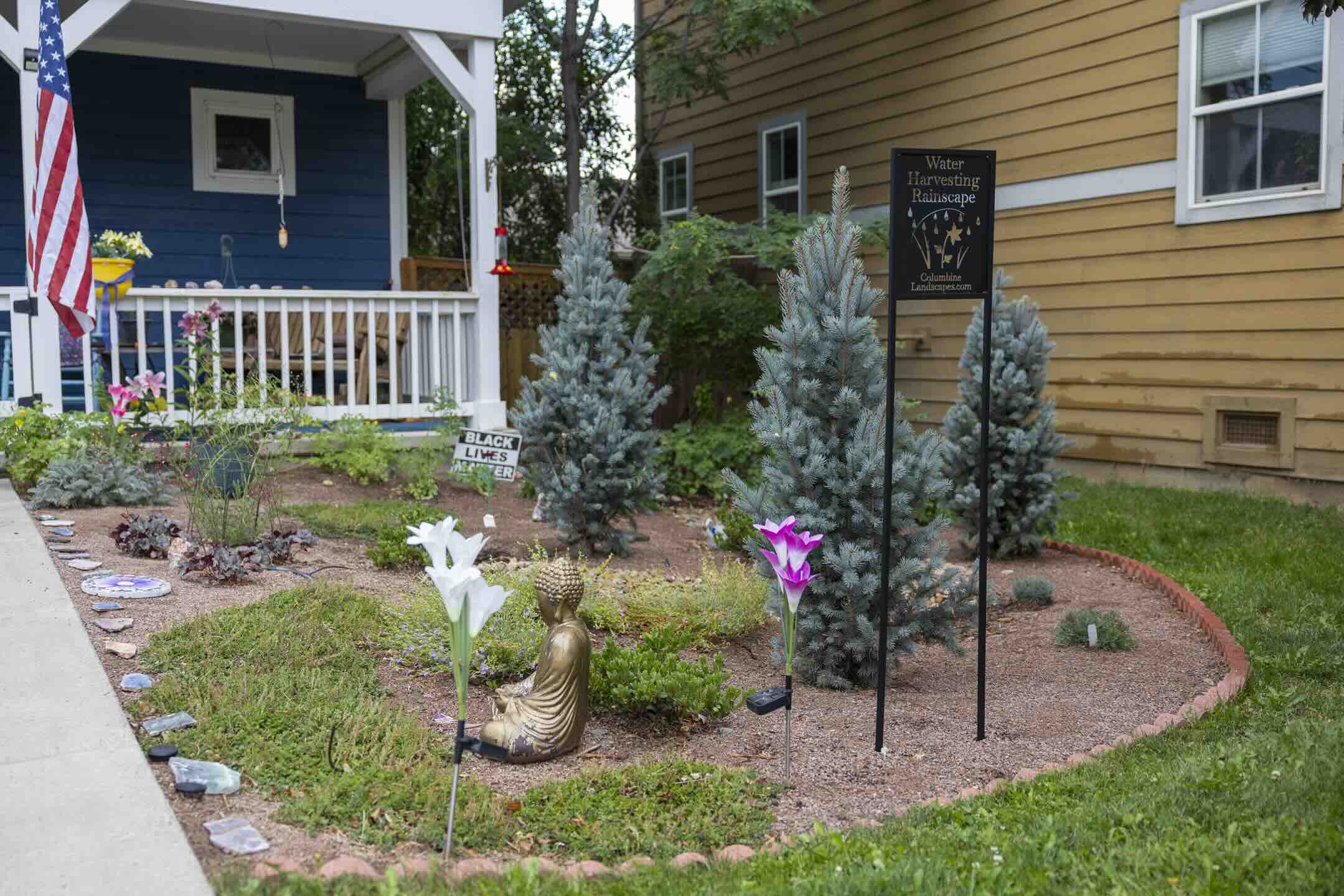
Designer Notes
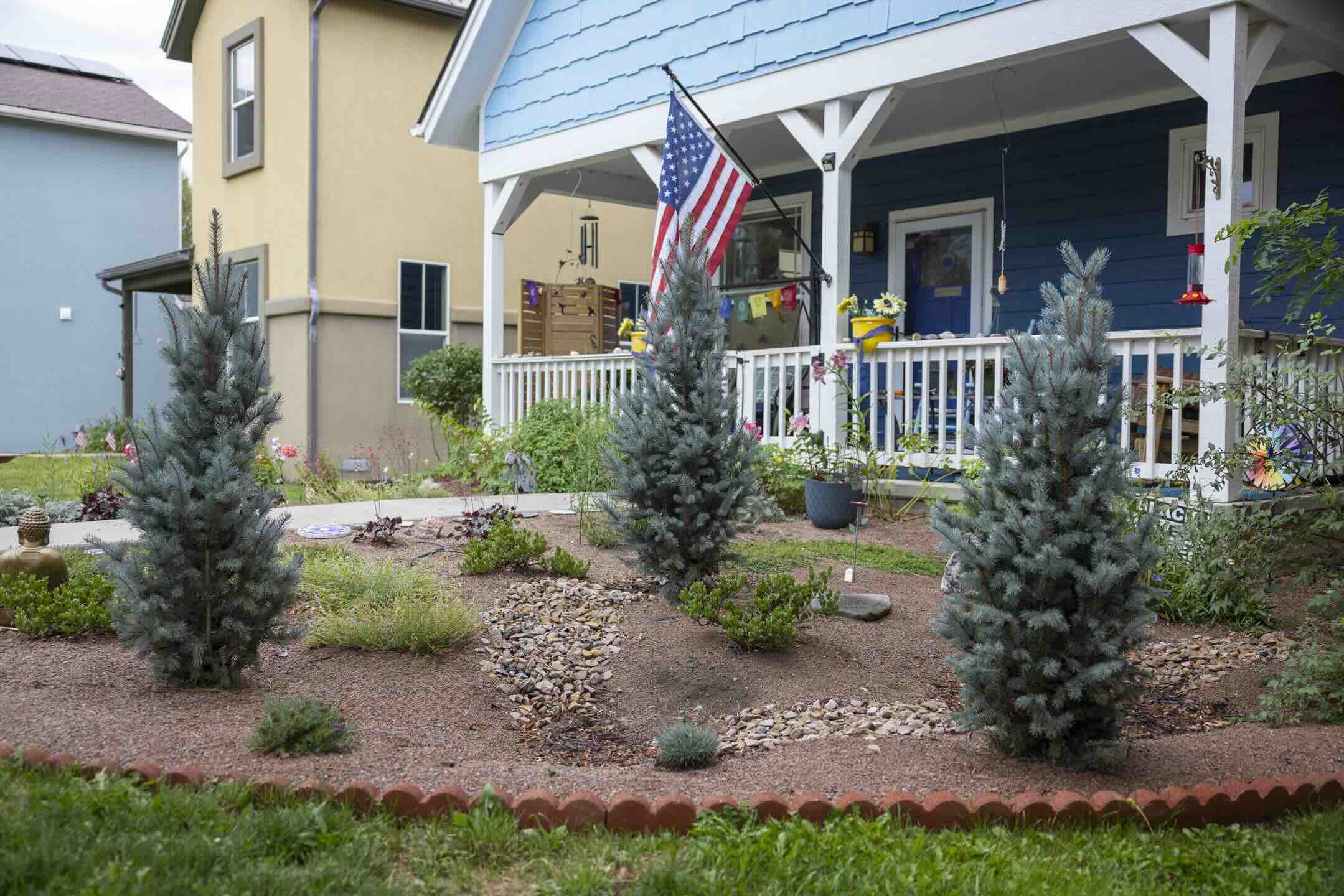
This project was designed to utilize runoff from the sidewalk that naturally drains through the property. The existing drainage area became a small earthworks system that feeds the new plants and soil with rainwater. We removed the entire front lawn and replaced it with a water-wise plant palette and visually appealing elements throughout- including unique crystals that the homeowner asked to incorporate.
Plant Notes
Blue Totem Spruces anchor this design and help screen the neighboring window, while Panchito Manzanitas form a beautiful evergreen groundcover. A variety of perennials add vibrancy and seasonal color, including a striking Bridge's Penstemon and our native Silverton Bluemat Penstemon. Filigree Daisy adds a textural silver foliage and sunshine-colored flowers. Purple Heuchera adds a highly contrasting purple foliage to the landscape.
Foundation & Hardscape Notes
A piece of the client shows up in this design - her love of crystals! We incorporated several of them as fun, year-round points of interest throughout the design.
The design also features two types of landscape gravel that capture the colors of the Southwest, Desert Swirl and Rustic Page. We utilized the Rustic Page within our earthworks system, which is surrounded by Desert Swirl crusher fines for mulch. The contrasting colors create an earthy base layer and allow the color of the plants to truly pop - all while being a functional rain harvesting system.
Homeowner Story
Story coming soon.